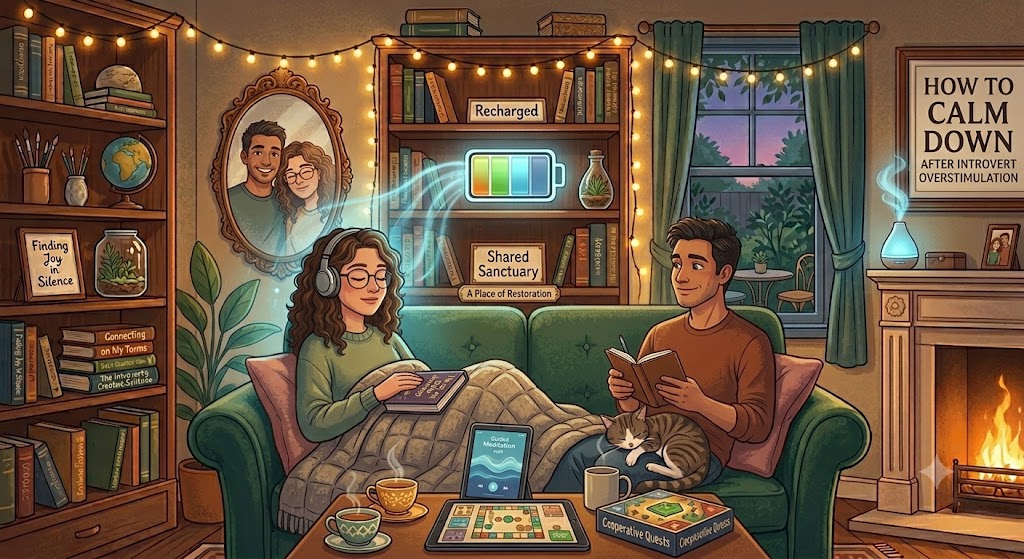
Introvert overstimulation is not just tiredness. It is a specific kind of overload — the result of too much noise, too many people, too many demands on your attention — and it leaves you feeling irritable, foggy, physically heavy, and desperate to be somewhere quiet. If you are reading this after a long day of meetings, socialising, or just being around people, you already know the feeling. The good news is that recovery is real, and it follows a pattern you can learn.
What Introvert Overstimulation Actually Does to Your Brain
The difference between introverts and extroverts is not just personality preference. Research points to real differences in how the brain processes stimulation. Introverts tend to have higher baseline cortical arousal — their nervous systems are already running closer to capacity. When external input piles on top of that, the system tips into overload faster than it would for someone who actively seeks stimulation to feel alert.
There is also a neurochemical angle. Introverts lean more heavily on acetylcholine as a feel-good neurotransmitter, which is associated with calm, focused internal activity. Extroverts get more out of dopamine, which spikes in response to external rewards and social excitement. A long social event floods the introvert brain with dopamine it did not ask for and is not well-suited to process efficiently. The result is not laziness or antisocial behaviour. It is a nervous system that has genuinely hit its limit.
Introvert overstimulation can also trigger a cortisol response — your stress hormone rising because your brain is registering too many competing signals at once. That explains the irritability, the difficulty thinking clearly, and the almost physical need to get away from sound and people.
Signs You Are Dealing With Sensory Overload as an Introvert
It often shows up as a kind of mental static — you are present, but nothing is fully registering. Someone is talking to you and you are nodding, but the words are not landing. You might notice that you have become unusually sensitive to sounds that would not normally bother you: a TV in another room, background music, overlapping conversations.
Physical signs are common too. A tight feeling in the chest, a dull headache, tension in the jaw or shoulders. Some overstimulated introverts describe feeling as though their skin itself is irritated — not a rash, just a generalised sensitivity to being touched or bumped.
Emotionally, you may feel a flat, blank quality rather than distress. Not quite sad, not quite anxious — just empty and done. Some people notice a low simmer of resentment toward whoever or whatever kept them in stimulating environments too long. That is not a character flaw. It is a signal worth paying attention to.
What Actually Helps After Introvert Overstimulation
The first thing that helps is removing yourself from the source of overload as soon as you reasonably can. When you leave a gathering, do not apologise. Do not explain. Just leave. Every extra minute of social performance costs you recovery time.
Silence is not optional during recovery — it is the mechanism. Not a podcast, not background music you enjoy, not a phone call with someone you like. Actual silence, or near-silence. Your nervous system cannot reset while it is still processing input. Give it nothing to process for at least twenty to thirty minutes.
Slow, deliberate physical activity helps more than lying completely still for most people. A quiet walk without headphones, slow stretching, or even washing dishes methodically — repetitive, low-demand movement seems to help the brain shift out of overload mode. It is not about exercise. It is about giving your body something gentle and rhythmic to do while your mind goes quiet.
Temperature also matters more than people realise. A cool room, cold water on your face or wrists, or a warm shower — all of these activate the body’s calming mechanisms via the vagus nerve. If you feel wired and depleted at the same time, try cold water before you try anything else.
Finally, do not schedule anything for the evening after a high-stimulation day if you can avoid it. Recovery from introvert overstimulation is not instant. You might feel functional again after an hour of quiet, but your reserve tank is still low. Protecting the rest of that day is not indulgence — it is maintenance.
When to Get Support
Occasional overstimulation is normal for introverts. But if you are regularly hitting overload within a few hours of starting your day, or if recovery takes days rather than hours, that is worth examining with a professional. Chronic overstimulation can overlap with anxiety disorders, sensory processing differences, or burnout that has moved beyond the introvert-recovery-cycle. A therapist familiar with introversion or nervous system regulation can help you identify what is happening and what to change.
A Few Questions Worth Answering
- How long does it take to recover from introvert overstimulation?
- It varies. After a moderately draining day, most introverts recover meaningfully within one to three hours of genuine quiet. After sustained social overload — a conference, a family event spanning several days — full recovery can take twenty-four to forty-eight hours. Sleep accelerates it significantly.
- Is introvert overstimulation the same as sensory processing disorder?
- Not exactly. Sensory overload in introverts is a neurological tendency, not a disorder. Sensory processing disorder is a clinical condition involving more severe and pervasive difficulty filtering sensory input. That said, some introverts do also have sensory sensitivities — the two can coexist.
- Can overstimulated introvert symptoms include physical pain?
- Yes. Headaches, muscle tension, and general physical fatigue are common during introvert recovery. The brain and body are genuinely taxed, not just metaphorically. Staying hydrated and eating something simple can reduce the physical symptoms alongside rest.
- How do introverts prevent overstimulation from building up?
- The most reliable method is building recovery time into your schedule before you need it, not after. Short solitary breaks during a long social day — even ten minutes alone — reduce the total load. Leaving events slightly before you feel completely done also preserves more energy for recovery.
Knowing what is happening in your nervous system does not make overstimulation disappear, but it does make it easier to respond to it clearly rather than pushing through until you crash. Rest is not a reward for productive people. For introverts, it is how the system stays functional.