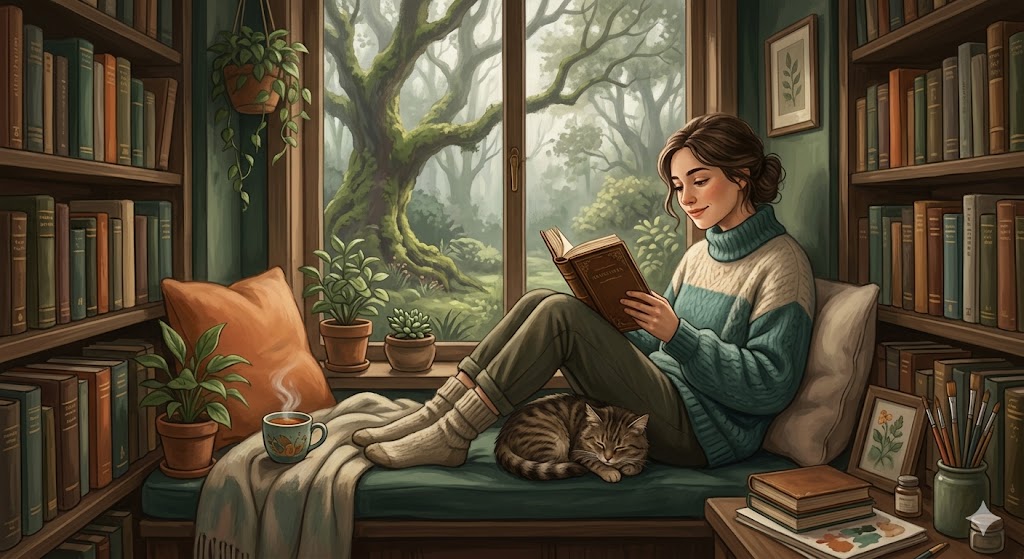
You’re not lazy. You’re not antisocial. You’re not being dramatic. You’re just running on empty in a way that’s really hard to explain to people who’ve never felt it — that kind of tired where even a text from someone you love feels like a request you can’t fulfill. Recognizing introvert burnout symptoms early matters, because this kind of burnout is real, it’s specific, and it tends to sneak up on you slowly, right until the moment it doesn’t.
What’s Actually Going On
Carl Jung first described introversion as a preference for turning inward — drawing energy from solitude rather than social interaction. But there’s actual neuroscience underneath that. Introverts tend to have higher baseline arousal in the brain, which means external stimulation — noise, people, decisions, expectations — hits harder and depletes resources faster.
There’s also a neurochemical layer. Introverts tend to be more sensitive to acetylcholine, a neurotransmitter linked to calm, focused inner processing. Extroverts run more on dopamine, which spikes with external rewards and social novelty. When an introvert spends too long in high-stimulation environments, they’re essentially running a tab they can’t afford — spending acetylcholine faster than they can restore it.
Burnout happens when the deficit becomes chronic. Not one hard week, but months of too many people, too many demands, too little real silence. The nervous system stops recovering between rounds.
Common Introvert Burnout Symptoms
You might notice that you’ve stopped enjoying things that used to restore you. Reading feels flat. Even a quiet evening at home doesn’t touch the tiredness. That’s a significant sign — when solitude stops working, something deeper is happening.
It often looks like irritability that feels out of proportion. Someone asks you a simple question and something inside you recoils. Not because you’re angry at them, but because your brain has nothing left to give.
You might find yourself canceling plans and then feeling guilty, then canceling more plans to recover from the guilt. A kind of loop that leaves you more isolated but no more rested.
There’s often a strange emotional flatness — not sadness exactly, just a muted quality to everything. Colors feel slightly less vivid. You watch yourself going through the motions of your own life.
And the small things become enormous. Choosing what to eat for dinner. Replying to an email. Deciding whether to shower. Each one feels like it costs something you don’t have.
What This Actually Looks Like
Maya works in a open-plan office. She’s good at her job, and she’s spent three years being good at it in front of other people. Every Tuesday she has back-to-back meetings until 4pm. She comes home, sits on the couch, and doesn’t move for an hour. Not scrolling. Not watching anything. Just sitting.
Her partner asks how her day was and she says “fine” — not because she’s hiding anything, but because forming a real answer feels genuinely beyond her. Later she’ll feel guilty for being distant. She’ll try to make up for it by pushing through dinner conversation when she has nothing left. She goes to bed more depleted than when she woke up. This has been Tuesday for eight months.
What Tends to Help
First: stop trying to recover in the same environments that drained you. Scrolling social media is not rest for an introvert. It’s more input. What you probably need is genuine sensory quiet — no screens, no background TV, no podcast. Just a room and your own thoughts for a while.
Build what some researchers call “micro-recovery” into your days before burnout takes hold. Ten minutes alone before a meeting. Lunch somewhere other than your desk. These aren’t luxuries. They’re maintenance.
When you leave a gathering, don’t apologize. Just leave. The apology loops — “sorry I’m bad at this, sorry I left early, sorry I need so much alone time” — cost you more than the event did.
Say no to one thing this week that you’d normally say yes to out of guilt. Not everything. Just one. Notice how that feels.
And if someone in your life keeps asking why you’re so tired, you don’t owe them a detailed explanation. “I need some quiet time” is a complete sentence. You don’t have to justify how you’re wired.
When to Get Some Support
If you’ve had several weeks of genuine rest and you still feel this flat and depleted, it’s worth talking to someone — a therapist, or your doctor as a starting point. Burnout can overlap with depression, and the two sometimes need to be untangled carefully. There’s no version of “just push through it” that ends well here. Getting support isn’t a sign that something is wrong with you. It’s a sign you’ve been carrying too much for too long.
A Few Questions Worth Answering
What are the main introvert burnout symptoms?
The introvert burnout symptoms to know are lengthening recovery, flatness before exhaustion, and dread at messages from people you like.
Which signs of introvert burnout appear first?
The signs of introvert burnout that appear first are irritability and difficulty starting small tasks, well before the collapse.
Are social burnout symptoms physical too?
Social burnout symptoms are frequently physical — heaviness, headaches, disrupted sleep — which is why they get attributed to something else.
Do introvert burnout symptoms resolve with a holiday?
Introvert burnout symptoms rarely resolve with a week away if the conditions are unchanged. The load has to drop, not pause.
- How long does introvert burnout take to recover from?
- Honestly, it depends on how long it’s been building. A few weeks of real rest — not busy rest, actual quiet — can shift things noticeably. Deeper burnout that’s been building for months might take several months to genuinely lift. There’s no shortcut, but things do move if you stop depleting faster than you’re restoring.
- What are the most common introvert burnout symptoms?
- The most common introvert burnout symptoms include emotional flatness, irritability that feels out of proportion, canceling plans and then feeling guilty about it, and even small decisions starting to feel exhausting. If several of these sound familiar, it’s worth taking them seriously.
- Is introvert burnout the same as depression?
- They can look similar and sometimes overlap, but they’re not the same thing. Introvert burnout tends to lift with genuine solitude and rest. Depression tends not to. If you’ve had real quiet time and still feel emotionally flat and exhausted, it’s worth talking to a professional rather than guessing on your own.
- Can you be an introvert and still get social burnout from being alone too long?
- Yes. Introverts still need human connection — just in smaller doses and on their own terms. Extended isolation can create its own kind of flatness. The goal isn’t zero social contact. It’s the right amount, with the right people, without the pressure to perform.
- Why do I feel guilty for needing so much alone time?
- Because most social systems — schools, workplaces, families — were not built with introverts in mind. You’ve probably spent years getting the message that needing solitude is something to apologize for. It isn’t. It’s just how your nervous system works best. The guilt is learned. It can be unlearned.
You already know something is off. That’s why you’re here at whatever hour it is, looking for words that match what you’re feeling. The fact that you can’t just “push through it” doesn’t mean you’re weak. It means you’ve been pushing through it for a very long time already, and your system is finally asking you to stop.