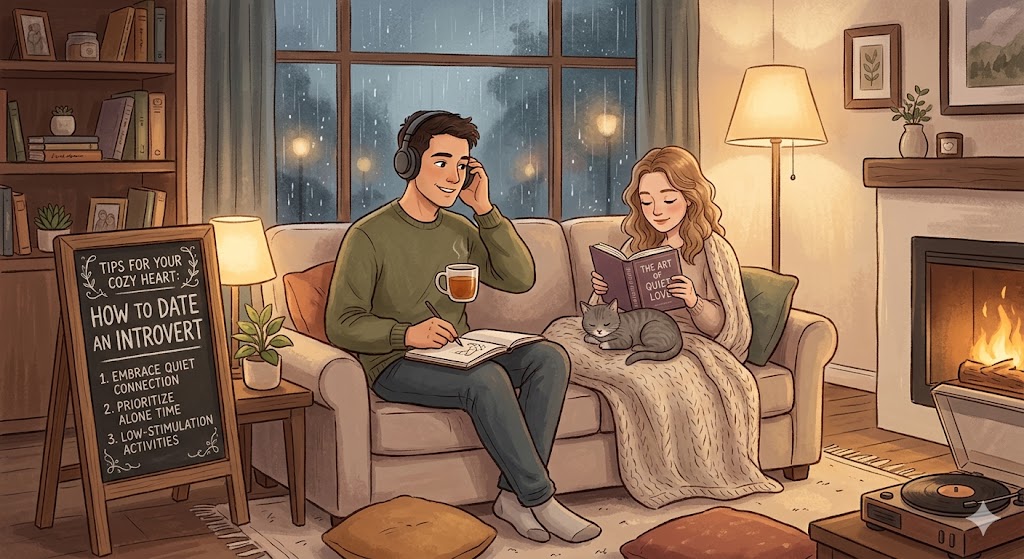
How to date an introvert starts with letting go of most conventional dating advice, which tends to assume a fairly consistent, high-energy social style that simply isn’t how this temperament operates or wants to be approached. If you’ve fallen for someone quieter and want to actually get it right rather than accidentally pushing them away, here’s the complete guide to understanding what genuinely works.
How to Date an Introvert: Understanding the Baseline First
An introvert’s need for solitude and lower-stimulation environments isn’t a temporary mood or a sign of disinterest — it’s a stable, ongoing feature of how they recharge, present regardless of how much they like you. Reading a request for a quiet night alone as rejection, rather than as an unrelated energy need, is the single most common mistake people make early in dating an introvert, and it tends to create anxiety on both sides that a little basic understanding could prevent entirely.
Recognising this from the start changes the whole dynamic for the better. Once you stop measuring their affection by how much time and energy they can offer at any given moment, and start reading their actual words and consistent actions instead, most of the early confusion resolves itself.
Introvert Relationships: What Actually Builds Connection
Depth over frequency is the core principle behind introvert relationships that work well. One long, genuinely engaged conversation tends to build far more real connection than several short, lighter check-ins throughout the week, and prioritising quality time over sheer volume of contact respects how this temperament actually experiences closeness.
Low-key, one-on-one dates tend to outperform larger group outings, especially in the earlier stages of dating an introvert. A quiet walk, a smaller shared activity, or a calm dinner somewhere that doesn’t demand raised voices lets an introvert actually be present and engaged rather than managing sensory overload throughout the entire date.
Patience with pacing matters considerably. An introvert may take longer to open up emotionally, longer to feel fully comfortable in a new relationship, and longer to introduce you to their wider circle — none of this reflects reduced interest, it reflects a naturally more gradual process of trust-building that tends to produce a genuinely solid foundation once it’s actually established.
Practical Dating Advice for Navigating Recharge Time
Respect stated needs for space at face value rather than searching for hidden meaning behind them. When an introvert partner says they need an evening alone, taking that literally and without anxiety tends to result in them returning more present and engaged than if the request had been met with worry or subtle pressure.
Build predictable rhythms into the relationship rather than constantly renegotiating plans. Introvert relationships tend to thrive on some structure — a standing regular date night, an agreed general cadence for contact — since predictability reduces the low-grade anxiety that comes with constantly guessing what’s expected.
Communicate your own needs honestly too, rather than silently accommodating everything and building quiet resentment. The healthiest version of dating an introvert isn’t one person adapting entirely to the other, but an honest, ongoing negotiation where both people’s actual needs get real consideration.
Learn their specific recovery preferences rather than assuming all introverts recharge identically. Some want a fully quiet evening alone; others recharge just as well with a low-key activity alongside a partner, as long as it doesn’t require sustained social performance. Asking directly, rather than guessing based on general introvert advice, tends to produce the most accurate picture of what actually works for your specific partner.
Questions People Ask About Dating an Introvert
What is the essential guide to how to date an introvert?
How to date an introvert starts by discarding advice built for high-energy social styles. Pace and format matter more than effort.
What should you know about dating an introvert early on?
Dating an introvert means slower disclosure and fewer, longer meetings. It is not reluctance; it is how trust accumulates.
What does a good introvert dating guide cover?
A good introvert dating guide covers venue choice, exit strategies and how to read silence — the three things that go wrong first.
What are the best tips for dating an introvert?
The best tips for dating an introvert: choose quiet venues, ask specific questions, and do not fill every pause. How to date an introvert is mostly about restraint.
How do I know if the relationship’s slower pace is genuine caution or something wrong?
A steadily, if slowly, deepening connection over time is a normal introvert pace; a relationship that consistently feels stuck without any forward movement at all, even after real trust-building efforts, is worth a direct, honest conversation instead.
How do I know if my introvert partner is losing interest or just needs space?
Ask directly rather than guessing, and watch for consistency — a partner who reliably re-engages warmly after time alone is showing the pattern is working correctly, not that interest is fading.
Should I stop inviting my introvert partner to group events?
Not necessarily — keep inviting them without pressure to attend every time, and be genuinely comfortable with an occasional “not this one” without treating it as a comment on the relationship.
How long does it typically take an introvert to feel fully comfortable in a new relationship?
It varies considerably by person, but generally longer than average — patience with this gradual pace tends to be rewarded with a relationship built on genuine trust rather than rushed familiarity.
Is it normal to feel like I’m doing all the social planning in the relationship?
Fairly common early on, though it’s worth discussing directly if it feels persistently unbalanced — a healthy dynamic usually finds some middle ground once both people’s actual preferences are named clearly.
What’s the biggest red flag when dating an introvert versus a normal adjustment period?
A genuine red flag looks like consistent withdrawal even after trust has built and reassurance has been given repeatedly, while a normal adjustment period looks like gradually increasing comfort and openness over weeks and months, even if it starts slowly.
How to date an introvert well ultimately comes down to trusting stated needs, valuing depth over constant contact, and being patient with a naturally slower pace — get those right, and introvert relationships tend to be some of the steadiest, most genuinely loyal ones available, built on a foundation that only gets sturdier with time.