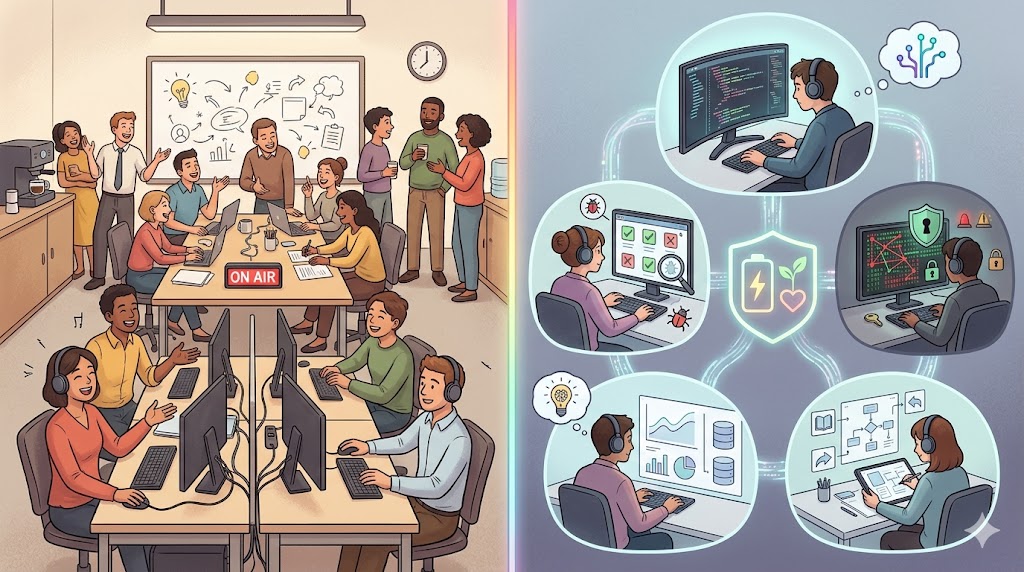
Tech is one of the few industries where introverts consistently thrive — not by accident, but because the work itself rewards deep focus, independent thinking, and precision over performance. If you find most workplaces exhausting and open-plan offices genuinely painful, the right tech jobs for introverts can change the entire experience of having a career. The question is knowing which roles actually deliver on that promise, and which ones just sound good on paper.
Why Tech Jobs for Introverts Work So Well
Carl Jung described introversion as a preference for internal processing over external stimulation. In practical terms, this means introverts tend to do their best work alone, in focused stretches, with minimal interruption. Many tech roles are built around exactly that structure. The core deliverable is often code, data, design, or analysis — not persuasion, performance, or constant collaboration.
There is also neurological grounding here. Introverts tend to be more sensitive to dopamine stimulation and rely more heavily on acetylcholine, a neurotransmitter associated with calm, focused attention. This is why a long debugging session or a complex data problem can feel genuinely satisfying rather than draining — it engages the system introverts already run on.
Remote work has made introverts in tech even better positioned. When meetings move to Slack threads and async video, the social overhead drops significantly. You can contribute meaningfully without being constantly “on.” That shift has opened up roles that used to require far more face time than the actual work demanded.
Roles That Consistently Suit Introverts
Software development is the obvious starting point, and for good reason. Most developers spend the majority of their day in their own head, working through problems, writing code, reviewing outputs. Standups exist, code reviews involve some back-and-forth, but the core work is solitary. Backend development specifically tends to involve fewer client-facing interactions than frontend or product roles.
Data science and data engineering sit in similar territory. The work is analytical, often self-directed, and results speak for themselves without requiring you to sell them constantly. You might present findings occasionally, but the job is fundamentally about thinking clearly and working with systems rather than people.
Cybersecurity — particularly roles like penetration testing, threat analysis, or security engineering — rewards methodical, independent thinking. Many security professionals work in small teams or alone, often asynchronously. The stakes are high, which suits introverts who take their work seriously and prefer depth over breadth.
Technical writing is underrated. If you communicate well in writing and understand complex systems, this role involves almost no impromptu socialising. You read documentation, test products, and write clearly. UX research and UI design also tend to offer more focused, project-based work, though both involve occasional user interviews or team reviews — worth factoring in if you want near-total quiet.
Signs a Tech Role Is Actually Introvert-Friendly
You might notice that job descriptions use phrases like “async-first,” “deep work environment,” or “minimal meetings” — these are reliable signals. Conversely, “collaborative,” “fast-paced,” and “cross-functional” often mean high-interruption, high-social overhead, regardless of the technical nature of the work.
It often shows up in the interview process too. Companies that respect focused work tend to give you technical problems to solve independently before putting you in panel interviews. If every stage of the hiring process is a group discussion, the working culture will likely reflect that.
Pay attention to team size and org structure. Smaller engineering teams at product companies often mean fewer meetings and more autonomy. Large enterprise tech environments can be politically noisy and meeting-heavy, even when the technical work is solid. The role title matters less than how that role sits inside the organisation.
What Actually Helps When Choosing
Ask directly in interviews how many meetings per week the role typically involves. It is a completely reasonable question and the answer is informative both in content and in how it is received. If the interviewer seems surprised by it, that tells you something.
Look for remote or hybrid roles where async communication is the default, not a workaround. Async cultures exist to make remote work functional — the side effect is that introverts no longer have to perform availability all day.
Be honest about what drains you specifically. Some introverts handle one-on-one conversations fine but find large meetings costly. Others find any real-time interaction taxing after a few hours. This distinction matters when choosing between, say, a UX researcher role versus a backend engineering role with rare human contact.
If you are retraining or early in your career, consider starting with roles that have well-defined solo work tasks: data analyst, junior developer, QA tester. These give you time to produce results before you are expected to perform socially.
When to Get Support
If avoiding social interaction at work has become less about preference and more about anxiety — if turning down a role because of one required presentation, or avoiding promotions because they involve more visibility — it may be worth speaking to a therapist who works with social anxiety. Introversion and social anxiety are different things. One is temperament. The other can quietly limit options in ways you do not have to accept.
A Few Questions Worth Answering
- What is the most introverted tech job?
- Backend software development, data engineering, and cybersecurity analysis consistently rank as the lowest-interaction tech roles. They involve deep, solo work with well-defined outputs and relatively little requirement for real-time collaboration or client contact.
- Can introverts succeed in tech leadership?
- Yes, though the path often looks different. Many introverts in tech move into staff engineer or principal engineer tracks rather than management, which rewards technical depth over people management. Those who do lead often prefer small teams and async communication styles.
- Are remote tech roles better for introverts?
- Generally, yes — but only when the company is genuinely async-first. Remote work in a culture that expects constant video calls and instant Slack responses can be more draining than a quiet office. The remote setup matters less than the communication norms around it.
- Do introverts in tech get overlooked for promotions?
- It happens. Visibility bias is real in most organisations. The practical fix is not to become more extroverted — it is to make your work visible in ways that suit you: written updates, documented decisions, clear project outcomes. Quiet consistency, made legible, tends to be respected over time.
The best tech jobs for introverts are not just tolerable — they can be genuinely well-suited to how you think and work. The key is being specific about what actually drains you, asking better questions during hiring, and not settling for a role that happens to be technical but is structured like a sales floor. Your temperament is not a disadvantage here. In the right environment, it is an asset.