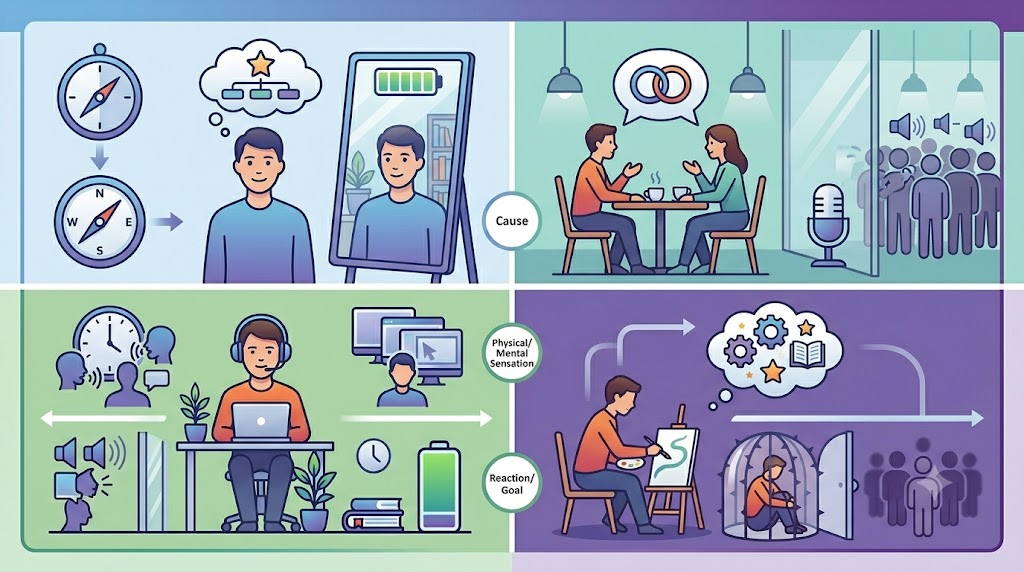
Happiness as an introvert is not what most advice columns describe. The standard prescription — socialise more, say yes, put yourself out there — assumes that a quiet life is a problem to fix. It isn’t. The real work is separating what genuinely satisfies you from what you’ve been told should satisfy you, and then building accordingly.
Why Happiness as an Introvert Looks Different
Introversion, as Carl Jung originally described it, is about where you direct your energy and attention — inward rather than outward. Neurologically, introverts tend to have higher baseline arousal in the cortex, which means they need less external stimulation to feel alert and engaged. A crowded room that energises an extrovert can genuinely exhaust you — not because something is wrong, but because your nervous system is wired differently.
Introvert well-being is also linked to acetylcholine, the neurotransmitter more dominant in introverts. It rewards long, focused activity: reading, creating, thinking deeply, sustained conversation with one person. Dopamine-driven stimulation — parties, novelty, social performance — costs introverts more than it gives back.
This matters because a lot of mainstream happiness advice is built around extroverted experience. If you keep chasing that model, you’ll feel like you’re failing at life. You’re not. You’re optimising for the wrong system.
Signs Your Life Isn’t Fitting You
It often shows up as a low, persistent tiredness that sleep doesn’t fix. You might notice that Sunday evenings feel like dread rather than rest, because Monday means performing again. You agree to things you don’t want to do and then spend the lead-up resenting them. Small talk leaves you feeling hollow rather than connected.
You might also notice that the moments when you feel most like yourself — absorbed in a project, walking alone, having a long honest conversation — feel almost stolen, like guilty pleasures rather than legitimate needs. That guilt is worth paying attention to. It usually means you’ve internalised someone else’s idea of what a good life looks like.
Introvert fulfillment tends to come from depth, not frequency. One meaningful exchange matters more than ten pleasant ones. One project you care about matters more than a packed schedule. When your life is structured around volume instead of depth, the dissatisfaction is quiet but constant.
What Actually Helps
Stop treating solitude as a reward for getting through social obligations. If being alone is what restores you, it belongs in your week as a non-negotiable, not as something you earn. Block that time before you fill your calendar with other people’s priorities.
Choose quality over quantity in your relationships deliberately. Two or three people you can speak honestly with will do more for your mental health than maintaining a wide social network you don’t really enjoy. It’s acceptable — genuinely acceptable — to let surface-level friendships fade.
Find at least one absorbing activity that requires no performance. This means something you do entirely for the doing of it: writing, building, growing things, studying a subject no one will quiz you on. The introverted lifestyle thrives on this kind of private engagement, where there’s no audience and no expectation.
When you leave a social event early, don’t apologise or invent an excuse. Say you enjoyed it and go. The discomfort of leaving cleanly is smaller than the resentment of staying too long. Practicing this once makes it easier every time after.
Finally, audit what you’re consuming. Social media built for extroverted performance — public metrics, follower counts, constant output — is genuinely draining for introverts. Using it less, or not at all, is not a sacrifice. For most introverts it’s a relief.
When to Get Support
Introversion is a personality trait, not a mental health condition. But if you’re withdrawing because of persistent low mood, anxiety, or fear rather than genuine preference for solitude, that’s a different thing. If being alone brings dread rather than rest, or if you’ve stopped doing the things you used to find absorbing, speaking with a therapist — ideally one who understands introversion without pathologising it — is worth considering.
A Few Questions Worth Answering
What does happiness as an introvert actually look like?
Happiness as an introvert looks quieter than the cultural template and is not a lesser version of it.
How to be happy as an introvert without changing?
How to be happy as an introvert starts by separating what genuinely satisfies you from what you were told should.
What is introvert happiness built on?
Introvert happiness is usually built on a small number of deep relationships, absorbing work and enough solitude to think.
Can you be a fulfilled introvert with a small life?
A fulfilled introvert life often looks small from outside and is not. Happiness as an introvert is measured by depth rather than breadth.
- Can introverts be genuinely happy without many friends?
-
Yes. Research on introvert well-being consistently shows that introverts benefit more from a few close relationships than from a broad social network. The number matters far less than the honesty and depth of the connections you do have.
- Is it normal for introverts to prefer being alone most of the time?
-
For many introverts, yes. Preferring solitude is not the same as loneliness. If you feel content alone and only lonely when you lack meaningful connection, your preference for an introverted lifestyle is simply how you’re built — not a sign of dysfunction.
- How do introverts deal with pressure to be more social?
-
The most effective approach is clarity, not defensiveness. You don’t owe anyone an explanation for how you spend your time. A calm, direct “I prefer smaller gatherings” or “I’m not available that evening” said without apology is usually enough. Repeated explanation invites repeated pressure.
- What careers or lifestyles support introvert fulfillment?
-
Work that allows sustained focus, autonomy, and minimal performance tends to suit introverts well — writing, research, design, programming, skilled trades, therapy. The specific field matters less than having control over your environment and enough quiet to think clearly.
Happiness as an introvert is not a modified version of someone else’s happiness. It’s built from knowing what actually restores you, and protecting enough space in your life to do it. That requires less self-improvement and more honest observation of what’s already working — and what you’ve been tolerating that doesn’t have to stay.