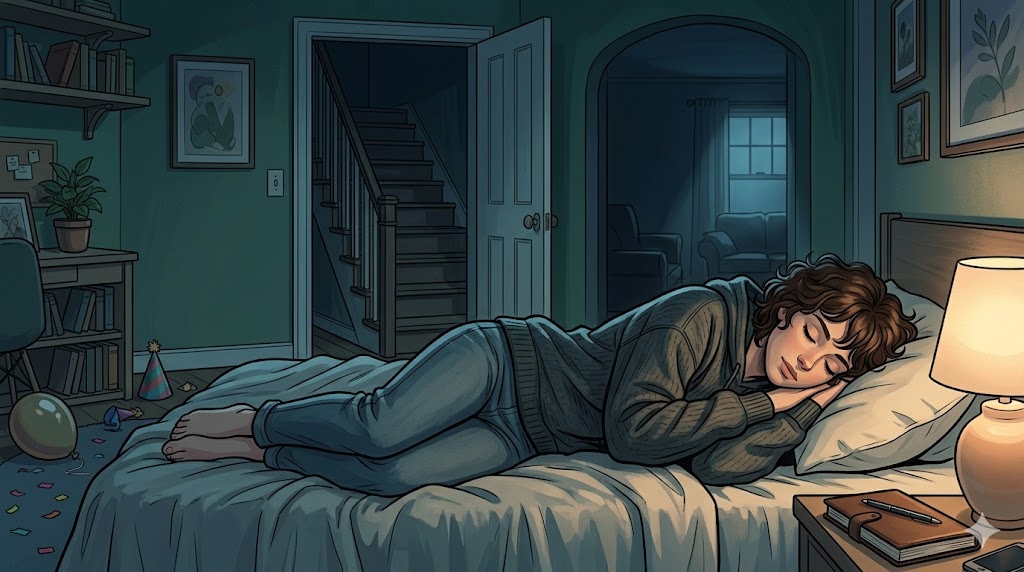
Being an introvert after a party is not simply tiredness. It is something more specific — a full-system depletion that can take hours, sometimes days, to clear. You may have laughed, contributed, even enjoyed yourself. And yet you arrive home feeling hollowed out, wired in the wrong way, and desperate for silence.
Why an Introvert After a Party Feels So Drained
Introversion is not shyness, and it is not social anxiety, though it can coexist with both. The clearest scientific model traces it to nervous system sensitivity. Introverts tend to have higher baseline arousal in the brain’s cortex, which means external stimulation — noise, conversation, eye contact, unpredictable social demands — pushes them toward overload faster than it does extroverts.
There is also a neurochemical dimension. Extroverts are more responsive to dopamine, the reward chemical that surges in stimulating environments. Introverts tend to run on acetylcholine, a neurotransmitter associated with calm focus and inward attention. A party floods the system with dopamine triggers — new faces, competing conversations, background music, laughter — and while that can be briefly pleasurable, it burns through an introvert’s preferred operating state quickly.
What follows is not laziness or antisocial behaviour. It is recovery. The brain has been working overtime processing an unusually high volume of social input, and it needs to return to a quieter baseline before it can function well again.
How Introvert Social Exhaustion Actually Shows Up
You might notice it the moment you close the front door behind you. A specific kind of relief — not quite happiness, more like pressure releasing. Talking feels like effort now, even to people you love. You might be physically still but mentally churning, replaying specific moments from the evening, analysing a comment you made, wondering how something landed.
Introvert overstimulation often comes with a strange mix of signals. You are too tired to do anything meaningful, but too activated to sleep. Some people feel mildly irritable. Others feel a low, flat emptiness that is not sadness exactly — more like all colour has been turned down. Hunger and thirst can register late, because the body has been in social-performance mode for hours and basic signals got deprioritised.
It often shows up the next morning too. A reluctance to check your phone. A need to keep the morning very quiet, very slow. Even if the party was genuinely enjoyable, the introvert energy drain can persist well into the following day.
What Actually Helps After a Social Event
The most effective thing is planned solitude — not accidental alone time, but time you have deliberately protected. Before you go to any social event, decide what happens after. Leave a clear evening free. Do not book breakfast plans for the next morning.
Silence matters more than most people expect. This means no podcasts, no TV as background noise, no catching up on messages. The brain has been processing language and social signals for hours. Giving it actual quiet — not distraction — is what allows it to settle.
Low-stimulation physical activity can help move the energy through. A walk without headphones, slow stretching, or simply sitting outside. Nothing that requires focus or performance.
When you leave a gathering, do not apologise or over-explain. A simple goodbye is enough. The guilt of leaving — the internal debate about whether it is too early, whether you seem rude — costs energy you do not have spare. Decide a reasonable time before you arrive, then leave at that time without negotiation.
Finally, eating something real when you get home matters. Introvert energy drain is partly physical, and a lot of people skip food at parties without realising it.
When to Get Support
Feeling drained after socialising is normal for introverts. But if the exhaustion is lasting several days, if you are dreading ordinary social contact with people you actually care about, or if the post-party crash is landing as genuine low mood rather than simple tiredness, that is worth paying attention to. A therapist familiar with introversion and burnout can help distinguish between personality trait and something that needs more support.
A Few Questions Worth Answering
What does an introvert after a party actually feel?
An introvert after a party feels a full-system flatness that can take a day or more to clear, regardless of how good the evening was.
How introverts feel after parties, honestly
How introverts feel after parties is often wired and hollow at once — too depleted to do anything, too stimulated to sleep.
Is party exhaustion introvert readers describe normal?
Party exhaustion introvert readers describe is entirely normal and scales with the number of separate conversations rather than the hours.
Does being an introvert after a party mean you did not enjoy it?
An introvert after a party can have enjoyed every minute. Cost and pleasure are separate accounts.
- Why do introverts feel worse after a party even if they had fun?
-
Enjoyment and exhaustion are not opposites. An introvert can genuinely engage with people, laugh, and connect — and still find that the sustained stimulation has depleted them. The energy cost is about the volume and type of input, not the quality of the experience.
- How long does introvert social exhaustion last?
-
It varies. After a few hours at a casual gathering, one quiet evening may be enough. After a full weekend of social events, recovery can take two or three days. Introvert energy drain tends to be proportional to the length and intensity of the social exposure, and to how much of it required performance or small talk.
- Is introvert overstimulation the same as a social anxiety attack?
-
No, though they can look similar from the outside. Social anxiety is rooted in fear — of judgement, of embarrassment, of saying the wrong thing. Introvert overstimulation is about nervous system saturation, not threat response. One is about danger signals; the other is about capacity.
- What should you tell people who think you are being antisocial after a party?
-
You do not owe anyone a detailed explanation of your nervous system. Something honest and brief works: “I need a quiet evening to recharge.” People who matter will accept that. You are not withdrawing from them personally — you are returning to a state where you can function like yourself again.
The after-party quiet that an introvert after a party needs is not a flaw in the personality. It is part of how this particular wiring works. Understanding that — really understanding it, not just knowing the word “introvert” — makes it easier to stop apologising for the recovery and start actually doing it.