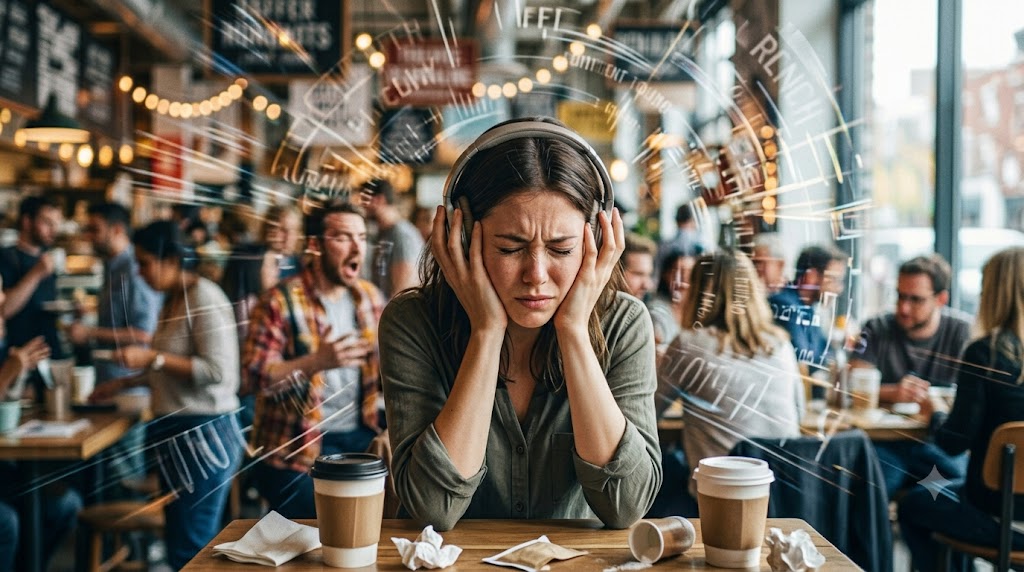
Introvert sensory overload is not a personality quirk or an excuse to avoid things. It is a real neurological response, and once you understand what drives it, the way you manage your energy starts to make a lot more sense. If loud environments leave you depleted for hours, or too many simultaneous inputs make it hard to think, this piece will explain why — and what actually helps.
Why Introvert Sensory Overload Happens
The most widely cited explanation comes from the work of psychologist Hans Eysenck, later built on by others studying the Big Five personality model. Introverts tend to have a higher baseline level of cortical arousal — meaning your brain is already running closer to its stimulation threshold before the day even starts. When external input piles on top of that, you hit overload faster than someone with lower baseline arousal.
Neurotransmitters play a role too. Research suggests introverts rely more heavily on acetylcholine pathways for reward and focus, while extroverts lean on dopamine. Acetylcholine rewards long, focused, internal processing. Dopamine rewards novelty and external stimulation. When you get flooded with noise, crowds, competing conversations, and bright lights, the dopamine-heavy environment works against how your brain naturally operates.
This is not a flaw in your wiring. It is simply a different sensitivity profile — one that works well in calm, controlled environments and struggles when the volume on everything gets turned up at once. Introvert overstimulation is a predictable outcome of a particular neurological setup, not a sign that something is wrong with you.
Signs You Are Already in Overstimulation
Sensory overwhelm does not always arrive dramatically. It tends to creep in. You might notice that you become unusually irritable with people you normally like, or that small sounds — a pen clicking, a TV in the background — start to feel physically intrusive. Your thinking gets slower and more fragmented, like trying to read in a room where someone keeps moving the book.
It often shows up as a sudden, strong desire to leave wherever you are. Not social anxiety exactly, more like a body-level signal that the environment has become genuinely unsustainable. You might get a tension headache behind the eyes, a tight jaw, or a kind of emotional flatness — not sadness, just a complete inability to access warmth or patience.
In the hours after an overstimulating situation, many introverts experience what feels like a low-grade crash: fatigue out of proportion to physical exertion, difficulty concentrating, and a strong pull toward silence and stillness. That is your nervous system asking for exactly what it needs — a genuine reduction in input, not just a change of scene.
What Actually Helps With Introvert Sensory Overload
The most effective first step is reducing input immediately, not gradually. If you are at an event and you feel the overload starting, step outside alone — not to check your phone, but to stand somewhere quiet for five to ten minutes. This is not antisocial behaviour. It is maintenance.
At home, low-stimulation environments genuinely accelerate recovery. Dim lighting, no background noise, and no screens for at least thirty minutes allow your cortical arousal to drop back toward baseline. Many introverts find that silence works faster than even calm music, because music is still input.
Build buffer time into your schedule after high-stimulation events. A dinner with eight people should ideally be followed by an evening alone, not another commitment the next morning. When you plan as though your energy is finite — because it is — you accumulate less overload debt over time.
It also helps to know your specific triggers. For some people, it is noise. For others, it is visual clutter, or having to track multiple conversations at once. Identifying your particular pressure points lets you reduce exposure proactively rather than always recovering after the fact. That distinction — prevention versus recovery — matters enormously for long-term energy management.
When to Get Support
If introvert sensory overload is happening daily, lasting for extended periods, or starting to affect your ability to work or maintain relationships, it is worth speaking to a professional. Chronic overstimulation can overlap with sensory processing sensitivity, anxiety disorders, or burnout that has compounded over time. A therapist familiar with introversion or a GP who takes fatigue seriously can help you figure out whether there is more going on beneath the surface.
A Few Questions Worth Answering
What causes introvert sensory overload?
Introvert sensory overload is caused by input exceeding filtering capacity, which happens sooner when the threshold is lower.
What are the main sensory overload symptoms?
The sensory overload symptoms to know are scattered attention, difficulty finding words, irritability, then a strong urge to leave.
What gives real sensory overload relief?
Sensory overload relief comes from removing input rather than adding calm. Introvert sensory overload responds to darkness and silence faster than to anything else.
How do you know when you are overstimulated introvert style?
Being overstimulated introvert style announces itself cognitively before physically. Introvert sensory overload is easiest to interrupt at that early stage.
- Is sensory overload the same as anxiety for introverts?
-
They can overlap, but they are not the same thing. Introvert overstimulation is primarily a neurological response to too much input. Anxiety involves anticipatory fear and worry. Some people experience both together, but managing overstimulation through reducing sensory input is different from treating anxiety.
- Why do open-plan offices hit introverts so hard?
-
Open-plan environments combine almost every known overstimulation trigger: unpredictable noise, movement in your peripheral vision, difficulty controlling interruptions, and no ability to regulate your sensory environment. For someone with a lower stimulation threshold, this is a genuinely hostile working condition, not a preference.
- Can overstimulation in introverts get worse with age?
-
Some introverts report increased sensitivity over time, particularly after periods of sustained stress or burnout. This may reflect a nervous system that has less tolerance after prolonged overextension. Better awareness of your limits tends to come with age too, which can look like increased sensitivity but is often just clearer self-knowledge.
- How long does it take to recover from sensory overwhelm?
-
Recovery time varies widely. A mild episode might resolve in an hour of quiet. A severe or prolonged one — after travel, a multi-day event, or a run of back-to-back social obligations — can take a full day or longer. Sleep is the single most reliable recovery tool available.
Knowing what is actually happening in your nervous system during introvert sensory overload changes how you respond to it. You stop treating it as weakness and start treating it as information. The environment was too loud. The input was too much. Now you reduce it, rest, and come back when you are ready.
Related reading
- Signs of Introvert Overstimulation — the early signs of overstimulation.
- Introvert and Emotional Exhaustion: Causes and Relief