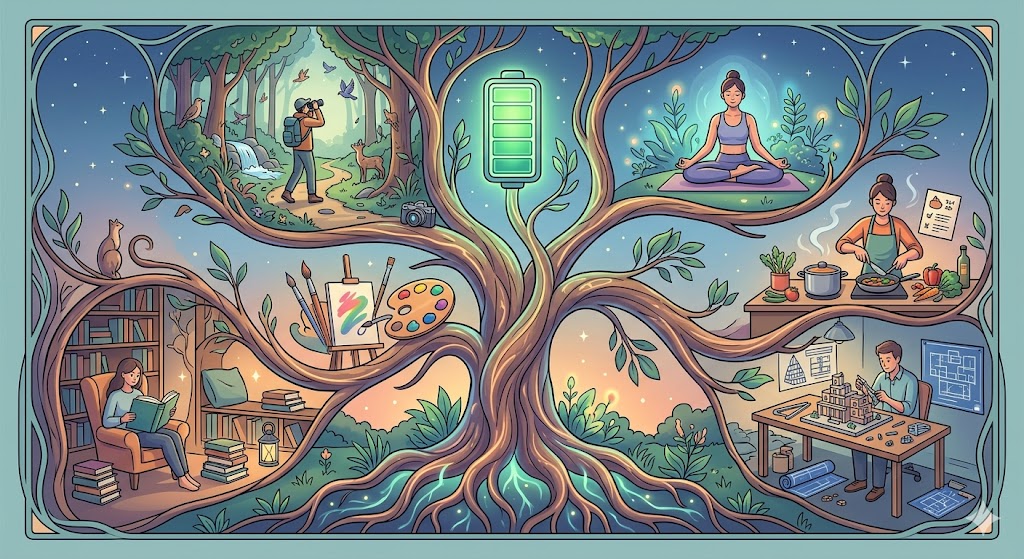
Knowing which recharge activities for introverts actually work can be the difference between recovering from a draining week and simply waiting it out, still depleted. If social events leave you feeling hollowed out, if you need far more quiet time than people around you seem to, that is not weakness. That is your neurology. The question is what to do about it.
Why Recharge Activities for Introverts Work Differently
Introversion is not shyness and it is not a disorder. Carl Jung first described it as an orientation toward the inner world — and the neurological research that followed adds some detail to that picture. Introverts tend to have higher baseline arousal in the cortex, which means external stimulation — noise, crowds, conversation — pushes them toward overload faster than it does extroverts. Where an extrovert gets a dopamine lift from a busy party, an introvert’s nervous system is already working harder just to process the room.
The neurotransmitter acetylcholine is thought to play a role here too. It is associated with focused attention, reflection, and internal processing — all things introverts tend to do naturally and draw energy from. Activities that engage this pathway tend to feel genuinely restorative rather than merely distracting.
This is why introvert energy restoration is not just about being alone. It is about reducing external demand on your nervous system while giving your mind something it can process on its own terms. Passive scrolling rarely does that. Watching television can, depending on what you watch and how. The quality of the solitude matters as much as the quantity.
Signs Your Energy Reserves Are Actually Low
Introvert burnout does not always look like collapse. It often shows up quietly. You might notice that small talk, which you normally tolerate, starts to feel genuinely unbearable. Emails you would usually answer in minutes sit unanswered for days. You cancel plans not because you want to do something else but because the thought of any social contact feels like lifting something heavy.
It can also appear as irritability that surprises you. You are not an angry person, but someone’s innocent question in the kitchen sets your teeth on edge. That friction is often a signal — your nervous system has been running hot and has very little buffer left.
Difficulty concentrating despite being alone is another pattern worth noticing. When even solitude does not feel restful, it usually means the depletion has gone deeper than one quiet evening can fix. That is when the specific activities you choose start to matter much more.
What Actually Helps: Recharge Activities That Restore
Reading fiction is one of the most consistently effective recharge activities for introverts, and there is a practical reason for that. It requires focused attention on an internal world — exactly the kind of processing that acetylcholine supports. It is absorbing without being socially demanding. Thirty minutes with a novel does measurably more for introvert recovery than thirty minutes on social media, even if both are done alone.
Spending time in nature without an agenda does something specific to the nervous system. Research on attention restoration theory suggests that natural environments engage what is called soft fascination — gentle, effortless attention that allows the directed attention system to recover. A walk without headphones, without a podcast, without a destination counts. Sitting in a garden counts.
Creating something with your hands — cooking a real meal, sketching, building something small — gives the mind an external anchor for internal focus. The activity is absorbing but not socially charged. Many introverts report that this kind of making is more restorative than pure rest.
Deliberately limiting decision-making on your days off matters more than it sounds. Decision fatigue compounds social fatigue. If you know you need to recover, reduce the number of choices your day demands. Eat the same breakfast. Have a loose plan so you are not negotiating with yourself all day about what to do next.
Finally, protecting morning quiet — even an hour before anyone else’s needs enter your space — is one of the most effective and under-used forms of how introverts recharge. It sets a baseline of calm that makes the rest of the day easier to manage.
When to Get Support
If you consistently feel exhausted despite getting regular alone time, that is worth paying attention to. Chronic depletion that does not respond to rest can sometimes point to anxiety, depression, or burnout that has moved beyond what lifestyle changes alone can address. A therapist who understands introversion — who does not treat your need for solitude as something to fix — can help you distinguish between introvert fatigue and something that needs more direct attention.
A Few Questions Worth Answering
Which recharge activities for introverts actually work?
The recharge activities for introverts that work are solitary, self-paced and absorbing without being demanding — walking, cooking, reading, making things.
What are the best ways to recharge introvert energy?
The best ways to recharge introvert energy involve reducing input rather than adding pleasure. Scrolling feels restful and is not.
Any introvert recharge ideas for a short break?
Introvert recharge ideas for twenty minutes: a walk without headphones, a genuinely empty room, or a repetitive task done alone.
Do recharge activities for introverts need to be enjoyable?
Recharge activities for introverts need to be undemanding more than enjoyable. Low input matters more than pleasure.
- How long does it take for introverts to recharge?
-
It depends on how depleted you are and what drained you. A few hours of solitude after a social evening is often enough. After a sustained period of introvert burnout recovery — weeks of overextension — it can take several days of intentional quiet before you feel like yourself again.
- Is staying home all day a good recharge activity for introverts?
-
It can be, but only if what you do at home is actually restorative. Passive scrolling or anxious inactivity does not restore introvert energy. The activity inside the solitude matters. Reading, making something, or structured rest tends to work better than simply being indoors.
- Why do introverts feel exhausted after socialising even when they enjoyed it?
-
Because enjoyment and energy cost are not the same thing. Your nervous system processes social interaction intensively — reading people, managing conversation, staying present. You can genuinely like the people you were with and still need significant recovery time afterward. That is normal introvert energy restoration, not ingratitude.
- Can exercise be a recharge activity for introverts?
-
Yes — the right kind. Solo exercise like running, swimming, or cycling alone tends to be restorative because it combines physical release with mental quiet. Group fitness classes or team sports add a social layer that can work against recovery if your reserves are already low.
The most useful shift you can make is treating your recharge time as a functional requirement, not a reward you have to earn. Your nervous system is not being difficult. It is telling you what it needs. The activities above are not indulgences — they are maintenance.