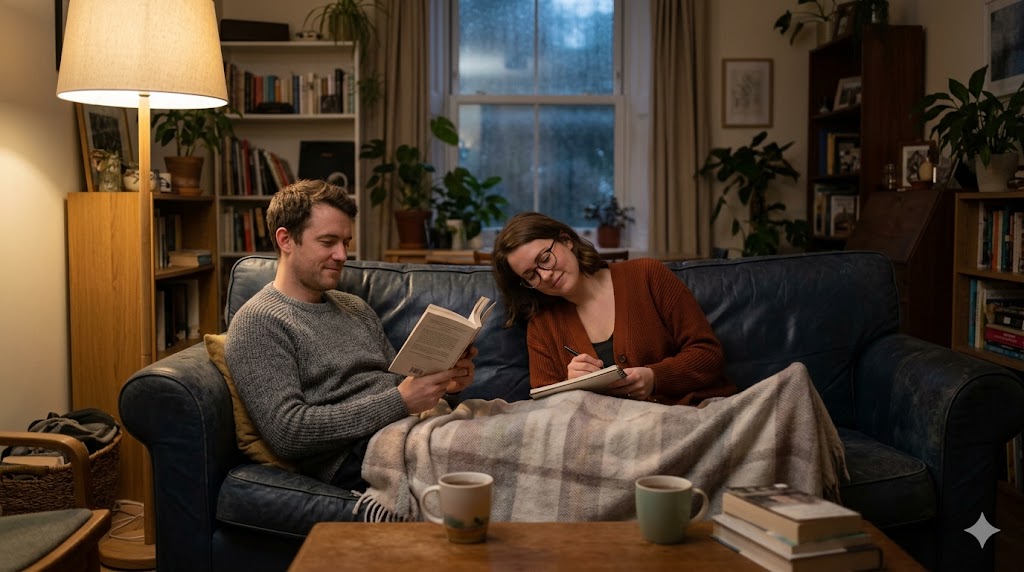
Learning how to love an introvert is not about managing a difficult person — it is about understanding someone whose inner world runs deep. Your partner is not cold, indifferent, or antisocial. They are wired differently, and that wiring has real patterns you can learn to read. Once you do, the relationship becomes easier for both of you — less friction, more genuine connection.
What It Actually Means to Have an Introverted Partner
Introversion is not shyness, though the two can overlap. It is a neurological preference for lower-stimulation environments. Research into brain chemistry suggests introverts have higher baseline arousal and rely more on acetylcholine — a neurotransmitter linked to calm, focused thought — rather than dopamine-driven external rewards. Social interaction is not inherently unpleasant for them. It is simply costly in terms of energy, in a way it is not for extroverts.
Carl Jung, who first mapped the introvert-extrovert spectrum, described introverts as people who draw energy inward. That does not mean they want to be alone all the time. It means that after stimulating events — a party, a long workday, even an emotional conversation — they need quiet time to restore themselves. This is not withdrawal from you. It is maintenance.
For partners, this distinction matters enormously. When your introverted partner goes quiet after a social evening, they are not shutting you out. They are refilling. Knowing how to love an introvert starts with accepting that their recharge process is non-negotiable, not a choice they are making against you.
Patterns You Will Probably Recognise
You might notice that your partner is warm and talkative at home but noticeably quieter in groups. This is not moodiness — it is the difference between low-stimulation and high-stimulation environments. One costs energy; the other does not.
It often shows up as a preference for one-on-one time over group socialising. Your partner may genuinely enjoy your friends but feel drained by a table of eight. They would rather have a real conversation than make small talk for three hours. This is not snobbery. It is how they experience connection — through depth, not breadth.
You may also notice that they need advance notice for plans. Spontaneous social commitments can feel jarring to an introverted partner because they mentally prepare for social interactions. Springing a dinner party on them an hour before is not just inconvenient — it is genuinely disorienting. They also tend to think before speaking, which means silences in conversation are not uncomfortable for them the way they might be for you.
What Actually Helps in a Relationship with an Introvert
Give alone time without making it mean something. When your partner needs an hour by themselves, resist the urge to interpret it as rejection or take it personally. A simple “I’m going to read for a bit” from them is not a signal about your relationship status. Treating it neutrally — even positively — removes a layer of guilt that introverts in relationships often carry unnecessarily.
Ask what they think, not just how they feel. Introverts often process emotion through thought. “What’s your read on what happened?” can open more than “Are you okay?” and feel more natural to them.
Plan with them, not for them. Before committing both of you to social events, check in. A quick “Are you up for Saturday?” preserves their sense of agency and prevents resentment. It is a small habit with an outsized effect on how safe they feel in the relationship.
Learn their signals for overstimulation. Every introverted partner has tells — going quieter, shorter answers, a particular look. Once you can read these, you can offer an exit before they hit empty, which earns more trust than almost anything else.
Do not pressure them to perform extroversion at your family events or social obligations. Asking them to be more outgoing in public is asking them to act against their nature to make others comfortable. That is a large, repeated ask. Be their ally in those spaces instead.
When to Get Support
Sometimes what looks like introversion is anxiety, depression, or avoidant attachment — and those need different attention. If your partner’s withdrawal is increasing over time, if they express persistent unhappiness, or if communication has essentially stopped, that is worth addressing with a therapist — individually or as a couple. Introversion explains a style of engagement. It does not explain emotional unavailability or ongoing disconnection.
A Few Questions Worth Answering
- Do introverts want less love, or just different love?
-
Different, not less. An introverted partner typically values quality of connection over quantity of interaction. They may not want daily phone calls or constant togetherness, but they feel love deeply and want it expressed in ways that match how they actually function — through presence, patience, and being truly heard.
- How do I stop feeling rejected by my introvert partner’s need for space?
-
Reframe what the space is for. It is energy recovery, not distance from you. Introverts in relationships often feel most connected after they have had time alone — they return more present, not less. If you track the pattern honestly, the space usually precedes closeness, not absence of it.
- What do introverts need most from a romantic partner?
-
Consistency, patience, and the absence of pressure to be someone they are not. An introverted partner thrives when they feel accepted without conditions — when being quiet is not a problem to fix and needing downtime does not require an apology. Security is the foundation everything else builds on.
- Can an introvert and extrovert have a lasting relationship?
-
Yes, and many do. The friction usually comes from unexamined assumptions — an extrovert who reads silence as coldness, an introvert who reads social enthusiasm as shallowness. When both people understand the difference in wiring and respect it rather than resent it, introvert-extrovert relationships can be genuinely complementary.
Understanding how to love an introvert is not a one-time lesson — it is an ongoing practice of paying attention to the specific person in front of you. The reward is a partner who, when they feel genuinely safe with you, will let you into a world most people never get to see.