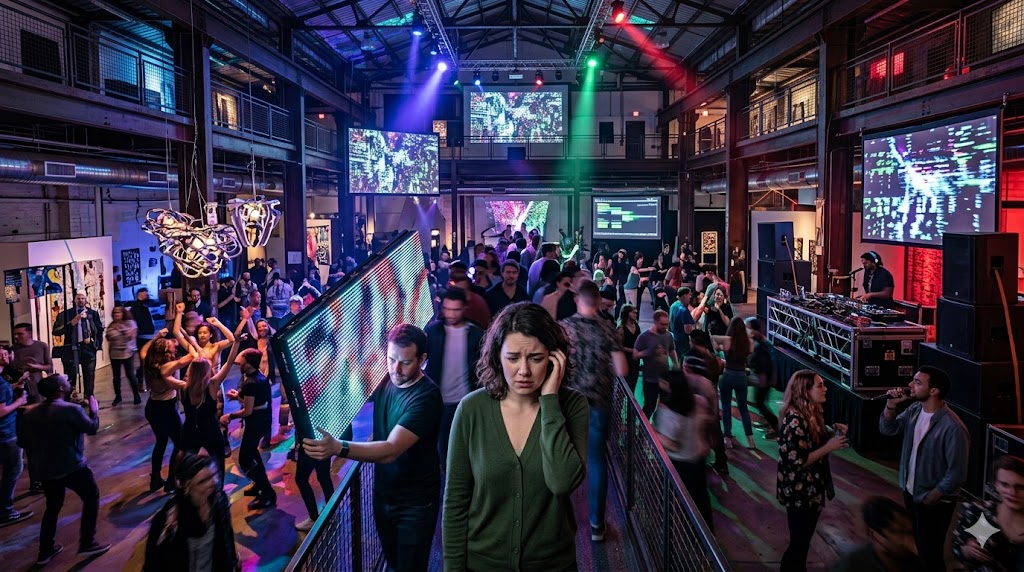
Introverts get overstimulated more easily than extroverts — and it has nothing to do with being weak or antisocial. Your nervous system is genuinely processing more. Crowds, noise, long conversations, bright lights, back-to-back meetings: each one draws from the same finite resource. By the time you feel the need to disappear, your brain has already been running at full capacity for a while.
Why Introvert Overstimulation Is a Biological Reality
The clearest explanation comes from psychologist Hans Eysenck’s arousal theory, which Carl Jung’s work on introversion foreshadowed decades earlier. Introverts have a higher baseline level of cortical arousal — meaning your brain is already closer to its stimulation threshold before the day even begins. Extroverts, by contrast, have lower baseline arousal and actively seek out external stimulation to feel alert and engaged.
There’s also a neurochemical angle. Research suggests introverts rely more heavily on acetylcholine as a feel-good neurotransmitter, while extroverts are more dopamine-driven. Dopamine is activated by novelty and external reward — parties, new people, rapid activity. Acetylcholine rewards slower, internal processes: focused thinking, meaningful one-on-one conversation, quiet reflection. When you’re forced into high-stimulation environments for extended periods, your system doesn’t just get tired. It gets flooded.
This is why introvert overstimulation isn’t a mood or an attitude. It’s a measurable shift in your nervous system’s capacity to process incoming information. The environment hasn’t done anything wrong. Your brain is simply doing exactly what it’s built to do — just at a faster rate than the setting allows for.
How Sensory Overload Shows Up for Introverts
You might notice it as a specific kind of mental static — the sense that you’re receiving too many signals at once and can’t properly respond to any of them. It often shows up mid-conversation as a sudden inability to find words, even though you knew what you wanted to say moments before. That’s not social anxiety, though the two can overlap. That’s your processing system hitting a wall.
Sensory overload in introverts frequently arrives as physical tension: a tight jaw, shallow breathing, or the peculiar exhaustion that comes not from physical exertion but from simply being around people for too long. Open-plan offices are a particular source of this. The combination of ambient noise, visual movement, and the expectation of availability creates a relentless low-grade drain that compounds over hours.
After prolonged exposure, the introvert energy drain can tip into something that looks like irritability or withdrawal. You’re not being difficult. Your system is rationing what’s left.
What Actually Helps With Introvert Overstimulation
The most effective thing you can do is build recovery time into your schedule before you need it, not after you’ve already hit a wall. If you have a full day of social or sensory demands on Thursday, protect Friday morning as non-negotiable quiet time. Treat it the way you’d treat a work commitment — because for you, it carries the same weight.
When you’re mid-situation and feeling the overload building, find a physical boundary: step outside for two minutes, go to the bathroom, move to a quieter corner. Even a brief reduction in stimulation gives your nervous system a partial reset. You don’t need to explain this to anyone.
At home, pay attention to which environments genuinely restore you versus which ones just distract you. Scrolling through your phone after a draining day adds stimulation, even though it feels passive. Reading, walking without headphones, sitting in a dim room — these tend to work better for actual recovery from sensory overload.
When you leave a gathering, don’t apologise. Just leave. The guilt you feel afterward costs more energy than the exit itself.
Finally, be honest with yourself about your current load. Introvert overstimulation compounds — three moderately draining days in a row hit harder than one intense day. Track your energy across the week, not just by the hour.
When to Get Support
If overstimulation is happening constantly, even in low-demand situations, or if it’s been affecting your ability to work, maintain relationships, or leave your home comfortably, that’s worth discussing with a doctor or therapist. Chronic sensory overload can signal nervous system dysregulation, anxiety disorders, or conditions like ADHD or sensory processing sensitivity — all of which respond well to the right kind of professional support.
A Few Questions Worth Answering
- Is overstimulation the same as social anxiety in introverts?
-
Not the same, though they can coexist. Introvert overstimulation is about processing capacity — your brain hits its limit. Social anxiety involves fear of judgment or negative outcomes. You can be overstimulated without being anxious, and anxious without being overstimulated. Telling them apart matters for how you address each one.
- Why do introverts get more overstimulated than extroverts in the same room?
-
Because your baseline arousal level is already higher. The same environment that energises an extrovert pushes an introvert past their threshold. It’s not about the room — it’s about where each nervous system starts. This is rooted in biology, not personality preference or attitude.
- Can introvert energy drain get worse with age or stress?
-
Yes. Chronic stress lowers your threshold, so stimulation that was once manageable starts to feel overwhelming. Hormonal shifts, poor sleep, and accumulated burnout all reduce your capacity. This isn’t permanent, but it does mean that what worked at 25 may need adjusting at 40.
- How long does it take to recover from sensory overload?
-
It varies. Mild overstimulation from a few hours of social activity might clear with an evening alone. Deeper introvert energy drain from several consecutive high-demand days can take a full weekend of low-stimulation time. Pushing through without recovery doesn’t reset the clock — it delays it and adds interest.
Understanding why your system responds the way it does removes a layer of self-blame that most introverts carry quietly for years. You’re not failing to cope. You’re working with a nervous system that processes deeply and costs accordingly. The more precisely you understand that, the better you can manage around it.