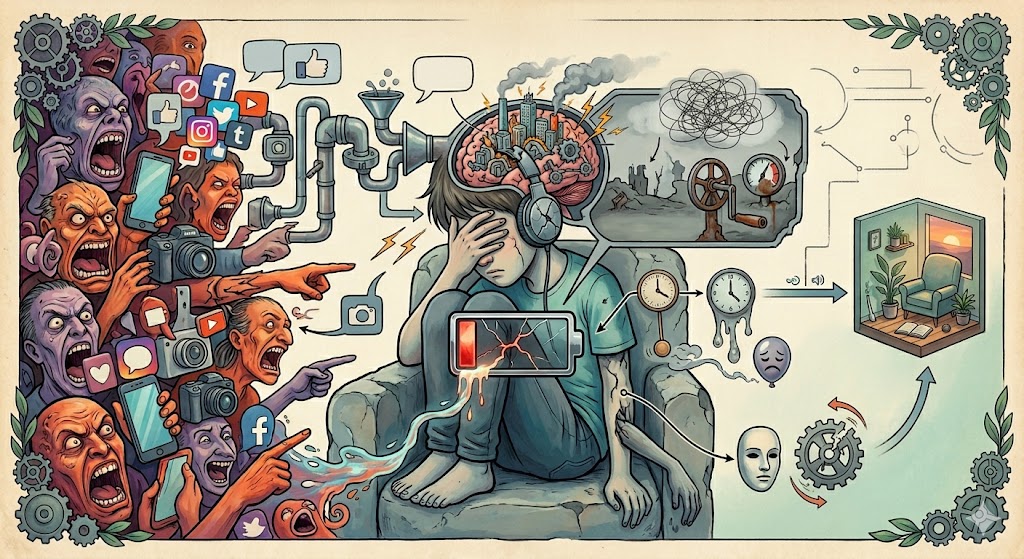
You’ve done everything right, said yes to enough things, smiled through enough small talk — and now you’re lying in bed at 9pm unable to read a single paragraph. Not sad, exactly. Not sick. Just completely, utterly empty. The kind of tired where even texting back feels like too much. That’s introvert burnout. And it’s real, it’s specific, and it’s not a personality flaw.
What’s Actually Going On
Introversion isn’t shyness. It’s about where your nervous system draws its energy from. While extroverts get a dopamine boost from social stimulation, introverts rely more heavily on a different neurotransmitter — acetylcholine — which is activated through quiet, reflection, and internal focus. Carl Jung described introverts as people whose energy flows inward. When you force that energy outward for too long, you don’t just get tired. You get depleted at a neurological level.
Introvert burnout happens when you’ve been running on empty for so long that the usual reset — a quiet evening, a weekend in — doesn’t even touch it anymore. Your baseline has shifted. What used to feel like a minor social hangover now lingers for days.
It’s also worth knowing that in the Big Five personality model, introverts tend to score lower on extraversion but often higher on conscientiousness. That means many introverts push through discomfort without complaint — for weeks, sometimes months — before the crash comes.
The Signs You Might Be Experiencing This
You might notice that you’ve started dreading things you used to genuinely enjoy. A dinner with a close friend feels like a task. A phone call from someone you love sits unanswered for three days — not because you don’t care, but because you have nothing left to give it.
It often looks like irritability that surprises even you. Small sounds feel loud. Conversations feel like interruptions. You find yourself snapping at people and then feeling guilty, which costs even more energy.
There’s also the fog. Decisions that used to feel simple — what to eat, whether to respond to that email — suddenly feel enormous. Your concentration goes first. Then your creativity. Then, if it goes on long enough, your sense of who you actually are outside of your obligations.
You might also notice you’ve stopped doing the quiet things that used to restore you. Reading. Walking. Sitting with your own thoughts. They don’t feel restful anymore. They feel like more effort you don’t have.
What This Actually Looks Like
Sam works in a job that’s technically fine. Good team, fair manager. But it’s open-plan, loud, and every day involves four hours of meetings. By Thursday, Sam is eating lunch in a bathroom stall just to get ten minutes of silence. By Friday evening, Sam cancels plans with a friend — for the third week running — and spends the weekend staring at the ceiling, not exactly resting, just… stopped. Monday arrives and the tank hasn’t refilled. Sam doesn’t understand why. Nothing dramatic happened. But introvert burnout doesn’t need a dramatic reason. It just needs enough small ones, stacked up, with nowhere to recover in between.
What Tends to Help
First, give yourself longer than you think you need. One quiet Sunday won’t undo three months of overstimulation. You’re not broken for needing more time than that.
Protect your mornings before the world gets to you. Even twenty minutes before your phone, before the news, before anyone else’s voice — that window is yours. Guard it like it matters, because it does.
When you leave a gathering, don’t apologize. Just leave. The guilt-explaining costs energy you need for the recovery itself.
Find one place that asks nothing of you. A specific chair. A particular walk. Somewhere your nervous system has learned to associate with zero performance. Go there regularly, not just when you’re desperate.
And be honest — carefully, selectively honest — with one person in your life about what you actually need. Not a speech. Just: “I need a quiet week.” The right people will understand. The ones who don’t are part of the data.
When to Get Some Support
If the emptiness has been going on for more than a few weeks and nothing is touching it, that’s worth paying attention to. Especially if you’re waking up already exhausted, if the things you used to love feel pointless, or if you’ve started to feel genuinely hopeless rather than just drained. A therapist who understands introversion — not one who’ll suggest you just “put yourself out there more” — can make a significant difference. You deserve actual support, not a reframe that ignores how you’re wired.
A Few Questions Worth Answering
- How long does introvert burnout last?
- It depends on how long it built up and how much genuine rest you can get. Mild burnout might lift in a week or two of real quiet. If it’s been building for months, give yourself months to recover. Rushing it tends to make it worse.
- Is introvert burnout the same as depression?
- They can overlap, but they’re not the same. Introvert burnout usually lifts with enough solitude and rest. Depression tends to persist regardless. If rest isn’t helping at all, or if you’re feeling consistently hopeless, talking to someone is a sensible next step — not an overreaction.
- Can introverts get burnout from working from home too?
- Absolutely. Video calls are socially taxing in ways that in-person conversation sometimes isn’t, because your brain works harder to read cues. Back-to-back video meetings can drain an introvert just as thoroughly as a full day in a loud office.
- Why do I feel guilty for needing so much alone time?
- Because most social structures were built by and for extroverts. Needing solitude to function well gets framed as antisocial or difficult. It isn’t. It’s just how your particular nervous system works. The guilt is borrowed. It was never really yours.
You don’t need to justify how much quiet you need. You don’t need to explain it, minimize it, or apologize for it. The version of you that exists after enough real rest — that version is not less social or less capable. That version is just actually you, finally with enough energy to show up as yourself.