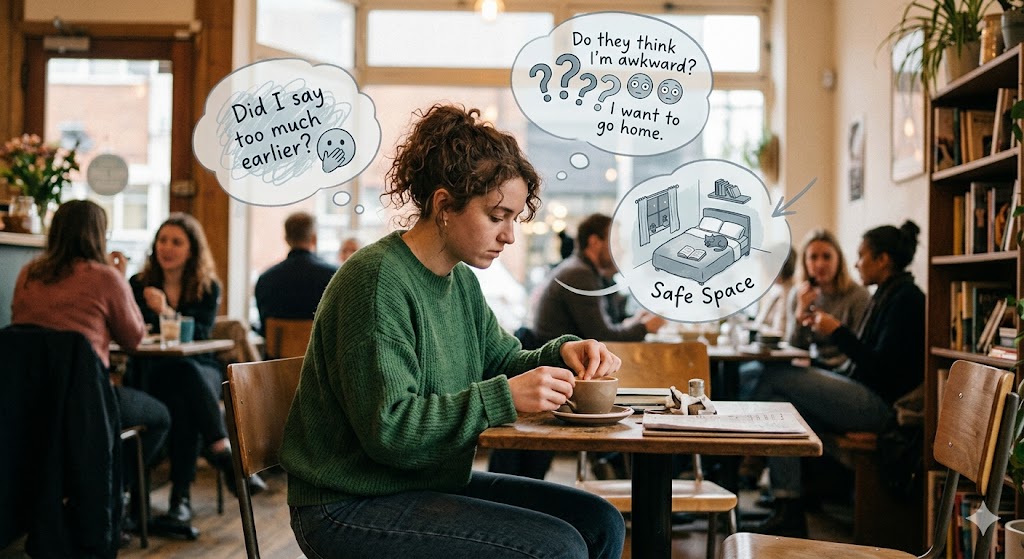
You’re exhausted in a way that’s hard to explain to people who haven’t felt it. Not tired from doing too much — tired from being around too much. And somewhere underneath that exhaustion, there’s a low hum of anxiety that never quite shuts off, even when you finally get the alone time you needed.
That combination — the overstimulation, the replaying of conversations, the dread before social events, the guilt after leaving them — is something a lot of introverts know intimately. It doesn’t mean something is wrong with you. But it does mean something specific is happening in your nervous system, and it’s worth understanding.
What’s Actually Going On
Introversion and anxiety aren’t the same thing, but they share a neurological neighbourhood. Research suggests introverts have higher baseline cortical arousal — meaning your brain is already processing more than the average extrovert’s, even when the room is quiet. Add a crowded dinner party or an unexpected phone call, and you tip past your threshold fast.
There’s also the dopamine and acetylcholine piece. Extroverts get an energy hit from social stimulation through dopamine reward pathways. Introverts tend to run more on acetylcholine, a neurotransmitter linked to calm focus and internal processing. External stimulation doesn’t feel rewarding — it feels like interference. When you’re wired this way and then placed in a world that defaults to open offices, group chats, and small talk, anxiety isn’t a disorder. It’s a reasonable response to chronic overstimulation.
Carl Jung, who first described introversion in depth, saw it as a natural orientation toward the inner world. The anxiety comes when the outer world keeps demanding you be someone else.
The Signs You Might Be Experiencing This
It often looks like dread that starts building days before a social event — not just nerves, but a specific low-grade dread that makes it hard to enjoy the days leading up to it. You agree to something that sounded manageable two weeks ago, and now it’s Sunday and you’d rather do anything else.
You might notice that you replay conversations for hours — sometimes days — after they happen. Not because something went obviously wrong, but because your brain is running quality control on every word you said, every pause, every facial expression you may have misread.
It often looks like a strong pull toward cancelling plans, not out of laziness, but because showing up feels like it will cost you something you don’t currently have. And then the guilt about cancelling arrives, which costs you something too. It’s the kind of tired where even texting back feels like too much — and then you feel terrible about that.
Phone calls feel disproportionately hard. Surprises feel destabilising. Being put on the spot feels like a small emergency.
What This Actually Looks Like
Maya works a job she genuinely likes, but by Thursday she has nothing left. She said yes to after-work drinks on Friday two weeks ago, when it seemed far enough away to be fine. Now it’s Thursday night and she’s lying on her couch, already running through what she’ll say when she arrives, what she’ll do if there’s nowhere quiet to stand, how early she can leave without it being weird.
She goes. She’s fine, mostly. She gets home at 9pm and sits in the dark for twenty minutes before she can do anything else. By Saturday she’s okay again. But she’s already half-dreading something that isn’t happening until next month.
That’s not a bad personality. That’s introvert anxiety doing what it does.
What Tends to Help
Give yourself a recovery window before you agree to things. Not every invitation needs an immediate answer. “Let me check and get back to you” is a complete sentence, and using it buys you time to actually assess your energy rather than agree from social pressure in the moment.
Build a quiet ritual for after social events — something small and consistent. Same tea, same playlist, same twenty minutes of nothing. Your nervous system is looking for a signal that the stimulation is over. Give it one.
When you leave a gathering, don’t apologise for leaving. Just leave. Every “sorry, I’m such a homebody, I know I’m boring” chips away at your sense that your limits are legitimate. They are.
Name what you’re feeling before you try to fix it. Anxiety plus introvert overstimulation plus guilt about the anxiety is a specific cocktail, and treating it like generic stress doesn’t work. Writing it out, even just a few sentences in your notes app at midnight, helps your brain stop looping.
Reduce the number of small decisions you make on high-stimulation days. Decision fatigue hits introverts hard. Fewer choices means more left in reserve.
When to Get Some Support
If the anxiety is making it hard to function — if you’re turning down things you actually want to do, if the dread is constant rather than occasional, if you’re using avoidance so much that your world is getting smaller — it’s worth talking to someone. A therapist who understands introversion won’t tell you to push through and socialise more. They’ll help you figure out what’s anxiety that can ease, and what’s just how you’re wired. Those aren’t the same thing, and telling them apart matters.
A Few Questions Worth Answering
- Is introvert anxiety the same as social anxiety disorder?
-
Not exactly. Social anxiety disorder involves intense fear of judgment and often causes significant disruption to daily life. Introvert anxiety is more about overstimulation and energy depletion than fear of humiliation. They can overlap, but they’re different starting points. A professional can help sort out which is which.
- Why do I feel anxious even when I’m alone?
-
Because you’re probably still processing. Introverts often replay and pre-process social situations long after they’ve ended. Your body left the room; your brain didn’t. That processing hum can feel like anxiety even in a quiet space. It usually settles once your nervous system gets enough actual rest.
- Can introversion get worse over time?
-
Introversion itself doesn’t worsen, but if anxiety goes unaddressed, avoidance can build. The less you do something, the more threatening it starts to feel. The goal isn’t to become more extroverted — it’s to stop the anxiety from shrinking your life below what you actually want it to be.
- Why do I feel guilty for needing so much alone time?
-
Because you grew up in a culture that treats extroversion as the default and introversion as something to overcome. That framing is wrong, but it gets inside you anyway. The guilt is learned. It can be unlearned, slowly, mostly by repeatedly acting like your needs are normal — because they are.
You don’t need to explain yourself to every person who finds your quietness strange. You don’t need to fix the part of you that needs more space than most. What you need — and what you deserve — is to understand yourself clearly enough that the anxiety stops feeling like a personal failing and starts feeling like information you can actually use.