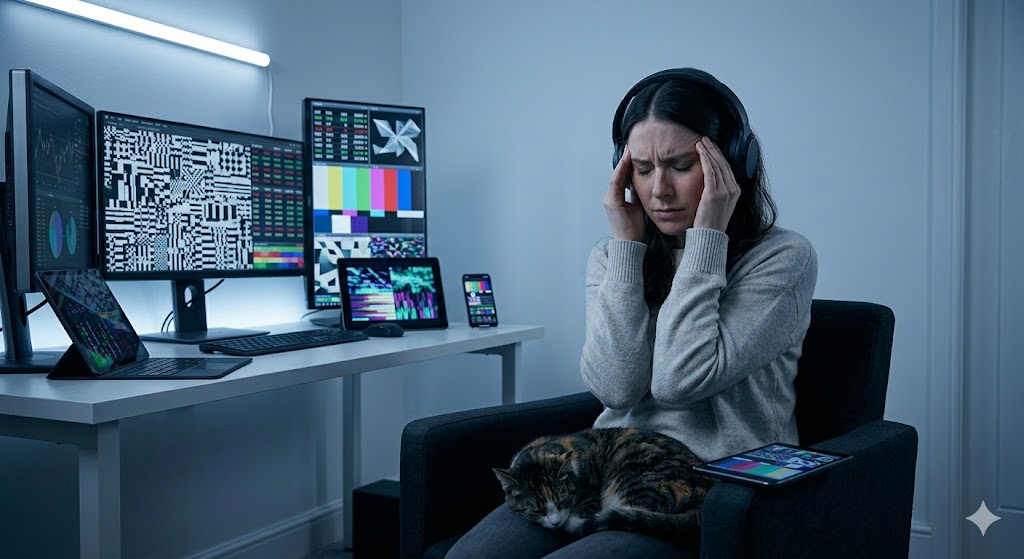
What are signs of introvert overstimulation? Introvert overstimulation is what happens when your nervous system has taken in more than it can quietly process. It is not shyness, not rudeness, and not a bad attitude. It is a real neurological response — and if you have been leaving social events feeling hollowed out, irritable, or unable to think straight, there is a clear reason for that.
Why Introvert Overstimulation Happens in the First Place
The difference between introverts and extroverts is not simply about preference — it involves how the brain processes stimulation. Research suggests introverts have higher baseline arousal in the cortex, meaning they reach a saturation point faster than extroverts do. What feels energising to an extrovert — a loud room, rapid conversation, constant social input — registers as noise to an introvert’s nervous system long before the evening ends.
Neurotransmitters play a role here too. Introverts tend to be more sensitive to dopamine, the reward chemical associated with social excitement. Rather than craving more of it, they become overwhelmed by it quickly. Acetylcholine — a neurotransmitter linked to calm focus and inner reflection — is the pathway introverts naturally prefer. Social overstimulation essentially floods the wrong channel.
This is not a flaw. It is simply a nervous system with a lower threshold for external input. The problem comes when you ignore the signals it sends you.
How Introvert Overstimulation Actually Shows Up
It often shows up as a sudden, flat exhaustion — not tiredness from physical effort, but a specific kind of mental blankness. You might notice that mid-conversation, you stop being able to follow what someone is saying, even though you genuinely want to. Words come out slower. Forming a sentence feels like lifting something heavy.
Irritability is another common signal. You might find yourself snapping internally at things that would normally not bother you — someone laughing too loudly, a light that is too bright, two conversations happening at once nearby. That sensory irritability is your nervous system telling you it is at capacity.
Social exhaustion in introverts can also look like emotional withdrawal. You are physically present but mentally somewhere far away. You stop contributing to conversation, not because you have nothing to say, but because the effort of translating thought into speech feels too costly right now. Some people also notice a tight chest, a mild headache, or the specific discomfort of wanting to be somewhere — anywhere — else.
What Actually Helps When You Are Overstimulated
The first thing that helps is leaving. Not in an hour. When you notice the signs, you can go. You do not need to explain, apologise, or wait for a natural pause. A quiet exit is not unkind — it is honest about what your body needs.
Once you are alone, resist the urge to fill the silence with screens and noise. Scrolling social media after sensory overload adds more input to an already saturated system. Sitting quietly, walking somewhere without earphones, or doing something with your hands — cooking, tidying, drawing — gives your brain the low-stimulation activity it needs to reset.
Build in transition time before and after demanding social events. Thirty minutes of genuine quiet before you go, and at least an hour of unstructured time afterward, meaningfully reduces how deep the depletion goes. This is not indulgence — it is calibration.
Also worth knowing: not all social events drain equally. Small, focused conversations with people you trust are far less costly than large, loud gatherings with acquaintances. When you have a choice, choose accordingly. Protecting your energy is not antisocial — it is realistic.
When to Take It More Seriously
Occasional overstimulation is normal for introverts. But if you are feeling this way after most social interactions, struggling to recover even after a full day alone, or noticing that your tolerance for stimulation is shrinking over time, that pattern is worth paying attention to. A therapist familiar with introversion or sensory sensitivity can help you identify whether something else — anxiety, sensory processing differences, or introvert burnout — is compounding things.
A Few Questions Worth Answering
What are the clearest signs of introvert overstimulation?
The signs of introvert overstimulation start with irritability and difficulty finding words, well before the obvious need to leave.
How do you know when you are introvert overstimulated?
You are introvert overstimulated when sounds start competing rather than layering, and simple decisions feel disproportionately hard.
What overstimulation symptoms come first?
The overstimulation symptoms that come first are cognitive rather than physical: scattered attention, then flattened responses.
Is sensory overload introvert experience the same thing?
Sensory overload introvert readers describe is the later stage of the same process. The signs of introvert overstimulation are what precede it.
- How long does it take an introvert to recover from overstimulation?
-
It varies, but most introverts need between a few hours and a full day of low-stimulation time after a demanding social event. Longer or more intense exposure takes longer to recover from. If recovery consistently takes several days, that suggests deeper introvert burnout rather than ordinary social exhaustion.
- Is introvert overstimulation the same as sensory overload?
-
They overlap but are not identical. Sensory overload is often linked to sensory processing sensitivity or conditions like ADHD and autism. Introvert overstimulation is primarily about social and cognitive input exceeding capacity. Some introverts experience both — high sensitivity to sound, light, or crowds alongside their social exhaustion.
- Can introvert overstimulation happen even with people you love?
-
Yes. Overstimulation is not about disliking the people involved — it is about the quantity and intensity of input, regardless of the source. A full weekend with family you adore can still leave you depleted. That response is not a sign something is wrong with the relationship.
- What is the difference between introvert overstimulation and social anxiety?
-
Social anxiety involves fear — of judgement, of saying the wrong thing, of being evaluated. Introvert overstimulation is not fear-based; it is capacity-based. An overstimulated introvert often enjoyed the social event but is simply full. Someone with social anxiety may dread events before they begin, regardless of energy levels.
Recognising introvert overstimulation for what it is — a neurological response, not a personal failing — changes how you manage it. You stop pushing through and start planning around it. That shift alone makes a significant difference to how you feel most days.