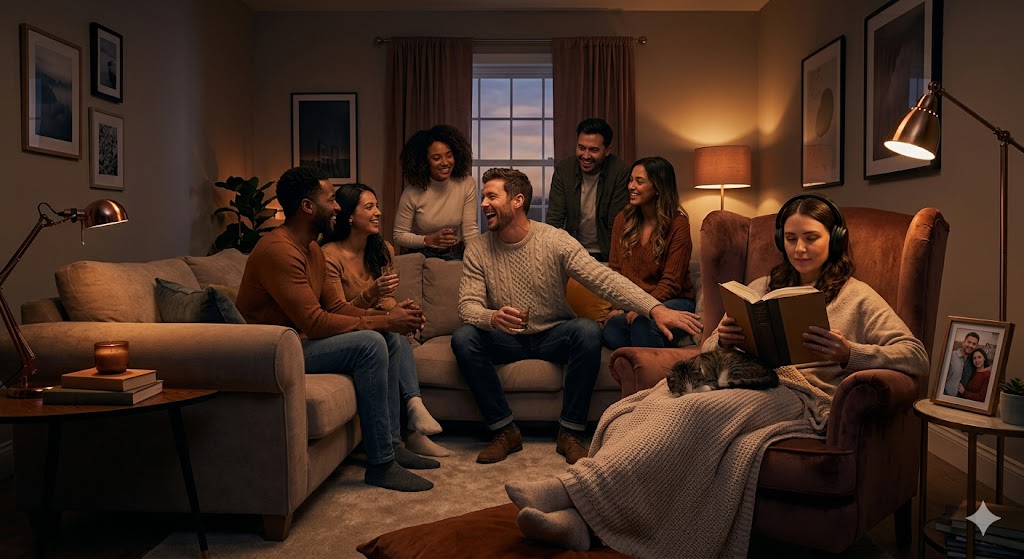
If you are an introvert married to extrovert life, you already know it is one of the most common pairings in long-term relationships — and one of the least honestly talked about. You love this person. You also find yourself regularly drained by the pace they run at. That tension is real, and it deserves a clear look rather than reassurance that opposites simply attract.
Why an Introvert Married to Extrovert Life Feels the Friction It Does
The difference isn’t about one person being social and the other being shy. It goes deeper than that. Introverts and extroverts process stimulation differently at a neurological level. Research into the dopamine and acetylcholine systems suggests that introverts tend to feel more comfortable with lower stimulation, while extroverts actively seek higher stimulation to feel engaged and alive. Your spouse isn’t being inconsiderate when they want to fill the weekend with plans. Their nervous system is genuinely pushing them toward that.
Carl Jung, who originally described these types, was clear that neither orientation is better — they are simply different ways of restoring and expending energy. The introvert recharges in quiet. The extrovert recharges through connection and activity. When two people with opposite systems share a home, a calendar, and a social life, those needs collide constantly and often silently.
The friction isn’t a sign that the relationship is wrong. It’s a sign that two genuinely different systems are trying to share the same space. Understanding that removes some of the moral weight from arguments that are really just mismatched energy needs.
How the Gap Between You Shows Up Day to Day
It often shows up not in dramatic arguments but in small, repeated moments. You come home from work needing silence; your partner wants to debrief the entire day within the first ten minutes. You feel relieved when plans get cancelled; your partner is visibly deflated. They thrive at the party you spent three days dreading.
You might notice that you often feel guilty — as though your need for quiet is a burden on them, or proof that you’re not a good enough partner. That guilt tends to make introverts push past their limits to keep the peace, which leads to quiet resentment over time. Your partner, meanwhile, may feel confused or even rejected when you withdraw, not understanding that your retreat has nothing to do with how much you love them.
The gap also shows up in how you each handle conflict. Many introverts need processing time before they can talk through a disagreement. Many extroverts want to resolve things immediately through conversation. This mismatch alone can generate significant secondary tension — arguments about how to have arguments.
What Actually Helps in an Introvert Extrovert Relationship
Name your need plainly, without apologising for it. “I need an hour to decompress when I get home” is information, not a complaint. Framing it clearly gives your partner something to work with instead of leaving them guessing why you’ve gone quiet.
For any introvert married to extrovert household, negotiating social plans in advance rather than case by case makes the biggest difference. Agreeing together on a rough rhythm — say, two social events a month where you both attend, and others your extrovert attends solo — removes the exhausting negotiation from each individual invitation. Your partner still gets their social life. You stop feeling ambushed.
Let your extrovert have an outlet that doesn’t require you. Friendships, a regular group activity, a standing dinner with colleagues — these matter. An extrovert who has no social life outside the marriage will lean harder on the introvert partner to fill that gap, which works for neither of you.
When you leave a gathering early, don’t over-explain or apologise. A simple “I’m heading out” is enough. Lengthy justifications often make introverts feel worse and leave extroverts more confused. Clarity is kinder than guilt-ridden explanations.
Build in genuine alone time that isn’t framed as rejection. Calling it “reading time” or “my morning hour” makes it concrete and predictable. Your partner can plan around something with a name; they can’t plan around a vague sense that you need space.
When to Get Support
If the introvert extrovert compatibility gap has calcified into contempt, chronic withdrawal, or one partner consistently feeling invisible, that’s worth addressing with a couples therapist. A therapist who understands personality differences can help you both articulate needs that have gone unspoken for years. This isn’t a last resort — it’s a practical tool, and going early tends to work better than waiting until the resentment is deep.
A Few Questions Worth Answering
What is hardest about being an introvert married to an extrovert?
Introvert married to an extrovert is hardest around pace. The friction is rarely about love and almost always about how many evenings out constitute a normal week.
Does introvert extrovert marriage last?
Introvert extrovert marriage lasts well when both stop reading the other needs as rejection. Being an introvert married to an extrovert fails on interpretation, not compatibility.
What helps when you are married to an extrovert?
Married to an extrovert works best with a standing agreement: which evenings are shared, which are separate, decided in advance rather than negotiated each time.
Is being an introvert married to an extrovert an advantage?
Introvert married to an extrovert can be a genuine advantage. Each supplies what the other under-produces, provided neither treats the difference as a fault.
- Can an introvert and extrovert have a happy marriage?
-
Yes, genuinely. The opposite personality marriage works best when both people understand the difference in energy needs and stop treating those differences as character flaws. Many couples with opposite temperaments report strong bonds — the friction, handled honestly, often builds real communication skills.
- How do I explain to my extrovert spouse that I need alone time?
-
Be specific and neutral. “I need about an hour after work before I can really talk” lands better than “I need space.” Specificity makes it about a timing preference, not a withdrawal from the relationship. Most extroverts respond well once they stop interpreting quiet as distance.
- Why does my extrovert partner take my introversion personally?
-
Because for extroverts, withdrawal often signals emotional distance or dissatisfaction. They experience connection through presence and conversation, so your absence reads as a message. Explaining that your quiet is restorative — not punitive — usually needs to be said more than once before it truly lands.
- Is introvert extrovert compatibility a real issue or just a personality quiz thing?
-
It’s real in the sense that energy needs, social preferences, and stimulation thresholds are genuine psychological differences with measurable effects on behaviour. The Big Five personality research consistently shows extraversion as one of the most stable traits across a lifetime. It doesn’t fade with effort or goodwill alone.
The introvert extrovert relationship doesn’t require one of you to change your fundamental wiring. It requires both of you to stop assuming your way of moving through the world is the default. That shift — small, quiet, ongoing — is where most of the real work lives.