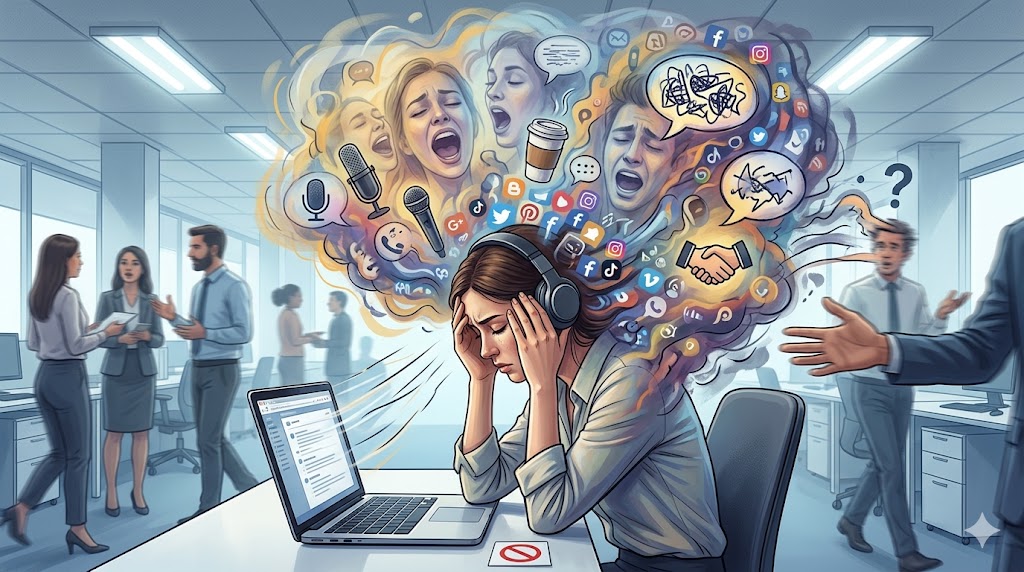
Introvert hangover at work is the specific, recognisable fog that follows a socially demanding day or event — foggy thinking, low patience, a strong pull toward isolation even from colleagues you genuinely like — and showing up to a normal workday while still carrying it is one of the more underrated professional challenges introverts deal with regularly. Understanding what’s actually happening makes it considerably easier to manage than treating it as a personal failing to push through silently.
What an Introvert Hangover at Work Actually Is
The term describes the lingering depletion that follows an unusually demanding social stretch — a conference, a big presentation, an intense client event, even an ordinary but unusually long meeting-heavy day — that hasn’t fully resolved by the time you’re expected back at your desk functioning normally. Unlike simple tiredness, an introvert hangover at work specifically affects social and cognitive bandwidth: patience wears thin faster than usual, small talk feels disproportionately effortful, and focus on demanding tasks becomes noticeably harder to sustain, even though physically you might feel fine.
This matters to name specifically because it’s often invisible to colleagues and even confusing to the person experiencing it, who may not connect a rough workday directly back to yesterday’s social demand. Recognising the pattern lets you plan around it rather than being repeatedly blindsided by an unexplained bad day.
Managing Social Exhaustion and Overstimulation the Next Day
Where possible, schedule lighter, lower-stakes work for the day immediately following a known social demand — save routine, solitary tasks for that day and push anything requiring your sharpest thinking or heaviest social interaction to later in the week when you’ll be genuinely recovered. This kind of proactive scheduling prevents an introvert hangover at work from colliding with something that actually needed your best performance.
Protect any small pockets of solitude the workday allows — eating lunch alone, taking a short solo walk, closing your office door or using headphones during focused blocks. These brief recovery windows, even short ones, meaningfully reduce overstimulation compared to a day spent entirely surrounded by ongoing colleague contact with zero breaks built in.
Lower your own expectations honestly for a hangover day rather than pushing to match your normal output. Accepting that today is a recovery day, and adjusting your task list accordingly rather than forcing full performance, tends to actually shorten how long the depletion lasts compared to trying to power through at full capacity and compounding the exhaustion further.
Preventing the Worst of It in Advance
If you know a demanding social event is coming, build in deliberate recovery time immediately after it rather than scheduling something else demanding right on its heels. Even a single evening of genuinely protected solitude between the event and the next workday can meaningfully soften the hangover that follows, compared to going straight from one demand into another with no buffer at all.
It’s also worth communicating honestly with a manager or close colleagues if the pattern is predictable and recurring — a simple, professional framing like “I tend to need a lighter day after big client events, can we plan around that” is a reasonable request that most reasonable workplaces can accommodate once they understand it’s about sustained performance, not lack of commitment.
Consider whether your calendar has a recurring structural cause worth addressing directly, rather than treating each hangover as an isolated event. If the same type of meeting or event triggers this pattern repeatedly, it may be worth renegotiating how that specific recurring demand is structured, rather than simply absorbing the cost every single time it happens.
Questions People Ask About Introvert Hangovers at Work
How long does an introvert hangover at work usually last?
It varies with how demanding the triggering event was, but many people find a day or two of deliberate lighter scheduling and protected solitude is enough to fully recover, compared to weeks if the pattern goes unaddressed and compounds.
Is it unprofessional to ask for a lighter schedule after a big event?
Not when framed around sustained performance and honest planning — most managers would rather accommodate a predictable recovery pattern than deal with declining output from someone pushing through exhaustion unaddressed.
Can caffeine or exercise fix an introvert hangover?
They may help with general energy somewhat, but they don’t address the specific social and cognitive depletion at the core of the pattern — genuine solitude and reduced social demand tend to work considerably better.
How do I explain this to colleagues who don’t understand the concept?
A simple, concrete framing usually works best — “big social days cost me more recovery time than they might cost you, I just need a quieter day after” tends to land as reasonable without requiring an extended explanation.
Should I mention introvert hangover recovery needs during a job interview?
It’s usually more useful to ask general questions about meeting culture and workload pacing rather than naming the specific concept, since the underlying need — reasonable recovery time after demanding stretches — comes across clearly enough without requiring specialised vocabulary a new employer may not be familiar with yet.
Introvert hangover at work is a real, manageable pattern once you recognise it for what it is — proactive scheduling, protected recovery time, and honest communication tend to shorten it considerably compared to simply pushing through and hoping it eventually, quietly passes on its own, day after increasingly depleted day at the office.