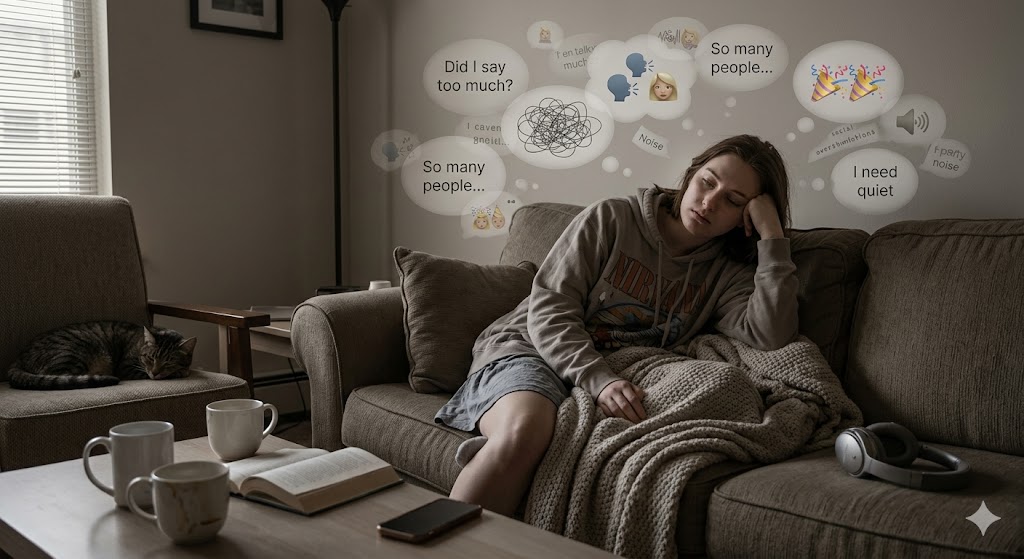
How to recover from an introvert hangover matters because the fog it produces — foggy thinking, low patience, a strong pull toward complete isolation — rarely resolves on its own schedule if you keep pushing through it the way you would ordinary tiredness. Real recovery requires actually addressing the specific kind of depletion involved, not just waiting it out or hoping a good night’s sleep alone will fix it.
How to Recover From an Introvert Hangover: Understanding What’s Depleted
An introvert hangover follows a socially demanding stretch — a big event, an unusually heavy stretch of social contact, an intense work period — and reflects a genuine depletion of the specific resource that manages stimulation and social processing, not simple physical tiredness. This distinction matters directly for how to recover from an introvert hangover effectively, since the fix isn’t more sleep or more caffeine, it’s genuine, low-stimulation solitude, which addresses the actual resource that got depleted in the first place.
Recognising the specific shape of this depletion — mental fog, reduced patience, a pull toward isolation even from people you like — helps you respond to it correctly rather than assuming something else is wrong or pushing through in a way that only extends the recovery period.
Energy Management Strategies for Faster Recovery
Protect a genuinely unstructured stretch of solitary time as soon as possible after the depleting event, rather than immediately filling the space with something else, even something enjoyable. The quality of this solitude matters as much as its existence — low stimulation, no screens demanding active engagement, nothing requiring further decision-making or social performance of any kind.
Reduce input actively during the recovery window rather than assuming rest alone will do the work. This means minimising additional stimulation broadly — fewer notifications, less background noise, less decision-making of any kind — since the nervous system doing the recovering benefits from genuinely reduced overall load, not just an absence of direct social contact.
Move at a slower pace deliberately during recovery rather than trying to immediately resume full normal activity. Introvert energy management during a hangover period benefits from treating the day itself differently — fewer commitments, simpler tasks, permission to move through the day more slowly than usual until the depletion genuinely lifts.
Prioritise physical basics that support nervous system recovery specifically — adequate hydration, a proper meal rather than something quick and depleting in its own right, and genuine sleep quality rather than just sleep duration — since these fundamentals directly support the same recovery process the solitude is doing.
Preventing the Next One From Hitting as Hard
Once you’ve recovered, it’s worth identifying what specifically triggered this particular hangover and building in more deliberate buffer time before the next similar event. Introverts who proactively schedule recovery time immediately following a known social demand, rather than reactively scrambling once the hangover has already set in, tend to experience considerably shorter and less severe episodes over time.
Keep a simple mental or written log of which specific types of events tend to produce the worst hangovers, since not all social demand costs the same. A large, unfamiliar gathering might drain you far more than an equally long visit with close friends, and knowing your own specific triggers lets you plan recovery time proportionally rather than applying a flat approach to every social commitment regardless of its actual cost.
Questions People Ask About Recovering From Introvert Hangovers
What is the fastest route to how to recover from an introvert hangover?
How to recover from an introvert hangover means removing input rather than resting: quiet, dark and alone, before anything else.
How long does introvert hangover recovery take?
Introvert hangover recovery usually runs from a few hours to a day, longer if you pushed through instead of stopping.
What does recovering from social exhaustion require?
Recovering from social exhaustion requires uninterrupted solitude rather than a lot of it. Ninety unbroken minutes beat a fragmented afternoon.
Can you speed up how to recover from an introvert hangover?
How to recover from an introvert hangover is shortened mainly by catching it early. Late-stage recovery takes several times longer.
Should I explain what an introvert hangover is to people who don’t understand it?
A brief, plain-language explanation — “big social days cost me more recovery time than usual, I just need a quieter stretch after” — tends to be understood well by most people without needing specialised terminology at all.
What’s the single most effective thing to do in the first hour after a demanding event?
Genuinely unstructured quiet time, free of screens and further decisions, tends to do more in that first hour than any other single intervention, since it lets the nervous system begin downshifting immediately rather than staying activated by continued stimulation.
How long does it typically take to recover from an introvert hangover?
It varies with how demanding the triggering event was, but many people find genuine, protected solitude over a day or two is enough, compared to a much longer, less complete recovery if the fog gets pushed through instead.
Does sleep alone fix an introvert hangover?
Not entirely — sleep addresses general physical tiredness, but the specific social and cognitive depletion involved usually also needs genuine daytime solitude to fully resolve.
Is it okay to cancel plans to recover from an introvert hangover?
Generally yes, if genuinely needed — protecting real recovery time tends to shorten the overall depletion period considerably compared to pushing through additional commitments while still depleted.
Can I prevent an introvert hangover before a known demanding event?
Building in solitary recovery time immediately before and after a known social demand can soften the eventual hangover considerably, even if it doesn’t eliminate the need for recovery entirely.
Is it normal for an introvert hangover to affect mood as well as energy?
Yes — irritability, low patience, and a flatter mood are common alongside the physical and cognitive fog, and all of it tends to resolve together once genuine recovery time has actually been given the chance to work.
How to recover from an introvert hangover comes down to genuinely addressing the specific depletion involved — protected, low-stimulation solitude, reduced input, and a slower pace — rather than simply waiting it out or pushing through as though it were ordinary tiredness.