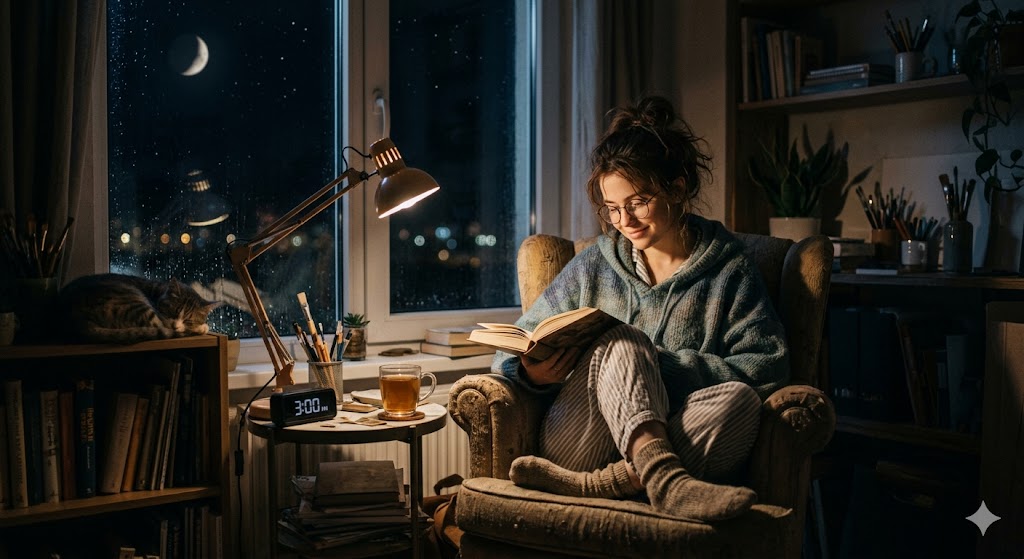
If you’ve ever found yourself wide awake at midnight, finally feeling like yourself after a day of forced small talk and fluorescent lights, you’ve probably wondered whether you’re wired differently than everyone else. The truth is that the debate between an introvert night owl and an introvert who thrives at sunrise isn’t really a debate at all — it’s a spectrum, and where you land on it depends on biology, habit, and how your nervous system processes stimulation. There’s no single “better” chronotype for introverts, no matter how many productivity articles insist that 5 a.m. is sacred. What matters is understanding why your particular rhythm feels right, and how to protect it without burning yourself out trying to match someone else’s schedule.
Why So Many Introverts Identify as Night Owls
Ask around in any introvert community and you’ll notice a pattern: a disproportionate number of people describe themselves as an introvert night owl who does their best thinking after the household has gone quiet. This isn’t just anecdotal folklore. The late hours offer something introverts crave structurally — an absence of unplanned social demands. No coworker popping by your desk, no phone buzzing with group chat notifications, no expectation that you’ll perform cheerfulness for an audience. For a nervous system that spends its daylight hours filtering out noise, interruption, and social obligation, midnight can feel like the first real exhale of the day.
There’s also a chronotype piece to this. Chronotype refers to your body’s natural inclination toward sleeping and waking at certain times, and it’s influenced by genetics as much as by preference. Some people are simply built to feel alert later in the evening, and when that biological tendency overlaps with introversion’s need for low-stimulation recovery time, the result is a strong pull toward night-owl living. It’s not that introversion causes night-owl tendencies directly — it’s that the conditions of nighttime happen to align unusually well with what an introverted nervous system needs to reset.
The Case for the Introvert Morning Person
That said, plenty of introverts swear by early mornings, and their reasoning is just as sound. Before the world wakes up, there’s a similar kind of quiet — no meetings, no texts, no small talk at the coffee machine. An introvert who rises at 5:30 a.m. to journal, read, or simply sit with a cup of coffee in silence is chasing the exact same thing as the night owl: undisturbed time to think without managing anyone else’s energy. The difference is simply which end of the clock offers that stillness more reliably, and that often comes down to individual chronotype rather than introversion itself.
Some introverts also find that mornings protect their energy more effectively across the whole day. Starting the day already resourced, rather than starting it depleted from the previous day’s socializing, can make it easier to face unavoidable interactions — meetings, errands, family obligations — without feeling raw by midafternoon. For these people, night owl habits would actually work against them, forcing late-night recovery time into the very hours they need to be asleep to function the next day.
Introvert Energy and the Question of Timing
At the center of this whole conversation is introvert energy — the finite reserve that gets spent on social interaction and needs quiet time to refill. The timing question isn’t really “morning versus night” in the abstract. It’s “when does my introvert energy actually recover most efficiently, and when does the outside world make the fewest demands on it?” For many people who identify as an introvert night owl, the answer is simple: the outside world goes quiet at night, and that’s when recovery becomes possible. For introvert morning people, the outside world hasn’t started making demands yet, and that’s their window instead.
Neither pattern is inherently healthier. What matters more is consistency, alignment with your actual biology, and whether your schedule lets you get enough sleep either way. An introvert night owl who stays up until 2 a.m. and still has to be alert for a 7 a.m. commitment isn’t benefiting from their chronotype — they’re accumulating sleep debt that will eventually erode the very calm they were chasing in the first place.
When Night-Owl Habits Tip Into Burnout
This is where things get complicated. Staying up late to reclaim quiet time can quietly become a burnout mechanism rather than a recovery strategy. If you’re an introvert night owl not because your body naturally prefers late hours, but because daytime has become so socially exhausting that night feels like the only escape, that’s worth noticing. Burnout often disguises itself as a lifestyle preference. Sacrificing sleep night after night to “get your time back” tends to backfire — you show up to the next day already depleted, which makes daytime interactions feel even more draining, which pushes you further into late nights to compensate. It’s a loop that can be hard to see from the inside.
The healthier version of night-owl living involves genuine biological alignment plus enough total sleep, not sleep sacrificed in exchange for solitude. If you notice chronic fatigue, irritability, or a growing dread of mornings, it may be less about your chronotype and more about your daytime environment demanding more social output than your introvert energy can currently sustain.
Finding What Actually Works for You
Rather than trying to force yourself into whichever schedule sounds more virtuous, pay attention to when you naturally feel most alert, most creative, and most at peace. Track it for a week if you have to. Some introverts discover they’re a genuine night owl through and through; others realize their “night owl” habits were really burnout in disguise, and that mornings would actually serve them better once they set boundaries during the day. Both outcomes are useful information, and neither one makes you more or less of an introvert.
Questions People Ask About Introvert Night Owls
Is it common for introverts to be night owls? Yes, it’s a frequently reported pattern, though it isn’t universal. Many introverts gravitate toward late hours because nighttime naturally reduces social demands and unplanned interruptions, which suits a nervous system that needs quiet to recharge. That said, plenty of introverts are just as energized by early mornings for the same underlying reason — both times of day offer solitude.
Can an introvert night owl become a morning person? With consistent effort, yes, though it usually takes weeks of gradual adjustment rather than a single decision. Shifting bedtime earlier in small increments, getting morning sunlight, and protecting daytime energy so evenings aren’t the only available recovery window can all help. Some chronotype tendencies are more fixed than others, so results vary.
How do I know if my night-owl habits are burnout instead of chronotype? Ask whether you’re staying up late because you genuinely feel alert and engaged, or because it’s the only time you don’t have to manage anyone else’s needs. If you’re exhausted the next day and dreading daytime obligations, that’s a signal to look at your daytime boundaries rather than your sleep schedule alone.
Ultimately, whether you’re an introvert night owl or someone who does your best living before sunrise, the goal isn’t to pick the “correct” side of a debate. It’s to notice when your introvert energy actually replenishes, protect that window fiercely, and make sure you’re not quietly trading sleep for solitude in a way that leads straight to burnout. Your chronotype is information, not a moral position — use it to build a life that actually fits how you’re wired, rather than a schedule borrowed from someone else’s version of peace.