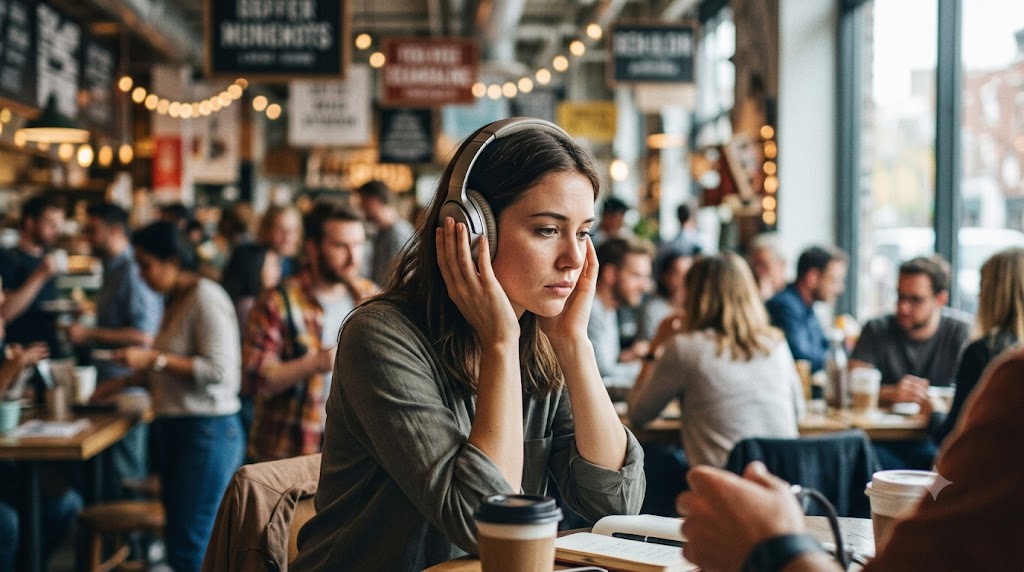
Introvert noise sensitivity is not a quirk or an overreaction. If loud environments leave you feeling wrung out, irritable, or foggy while others around you seem unbothered, there is a neurological reason for that — and it is worth understanding.
Why Introvert Noise Sensitivity Has a Real Basis
The introvert brain processes stimulation differently. Research suggests introverts have naturally higher baseline cortical arousal, meaning their nervous systems are already running closer to their upper threshold before any external input arrives. Noise — especially unpredictable or layered noise like open-plan offices, crowded restaurants, or parties — pushes them past that threshold faster than it would an extrovert.
There is also a neurochemical dimension. Introverts tend to be more responsive to acetylcholine, a neurotransmitter associated with calm, focused internal processing. Extroverts lean more on dopamine pathways that reward external stimulation. Loud environments flood the system with sensory data that the introvert brain has to work harder to filter, which burns energy quickly and produces genuine fatigue — not dramatics.
This overlaps with a broader trait called sensory processing sensitivity, identified by psychologist Elaine Aron. Not every introvert is a highly sensitive person, but the two traits overlap significantly. Both involve deeper processing of environmental input, which makes noise more than background — it becomes foreground whether you want it to or not.
How Noise Overwhelm Actually Shows Up
You might notice that you lose your train of thought mid-sentence when a conversation is happening nearby. Background music in cafés might feel fine for twenty minutes, then suddenly unbearable. Certain frequencies — high-pitched sounds, the drone of an air conditioner, overlapping voices — might snag your attention involuntarily, no matter how hard you try to focus elsewhere.
It often shows up as irritability that seems disproportionate. You snap at someone not because of what they said but because your nervous system has been handling background noise for three hours. After a noisy event, you may need an hour or two of genuine quiet before you feel like yourself again — not just quiet from conversation, but quiet from all input.
Sensitivity to sound in introverts also tends to spike when you are already tired, stressed, or socially depleted. Noise that was manageable on a rested Tuesday morning can feel genuinely painful on a Friday afternoon after a full week of open-plan office life. That variability is not inconsistency. It reflects how much processing bandwidth you have left.
What Actually Helps With Noise Sensitivity
The most effective thing is reducing unnecessary noise exposure before you hit your limit, not after. That means leaving a noisy environment while you still feel okay, not when you are already overwhelmed. The recovery time is much shorter if you exit early.
Noise-cancelling headphones are one of the most practical tools available. Wearing them without playing anything through them still reduces ambient noise by 20-30 decibels, which can make an open office workable instead of draining. You do not need to justify wearing them.
White noise or brown noise played at a low volume can mask unpredictable ambient sound, which is often what the brain finds most tiring. The nervous system responds better to consistent sound than to irregular bursts. Apps like myNoise or a simple fan can create that buffer.
If you work in a noisy environment, scheduling blocks of genuine quiet during the day — not just headphones-on quiet, but actual silence — helps prevent the cumulative drain that leads to full overstimulation. Even fifteen minutes in a quiet room at lunch makes a measurable difference by mid-afternoon.
At social events, positioning matters. Sitting near the edge of a room rather than the centre, or near a wall rather than in open space, reduces the amount of sound arriving from multiple directions simultaneously.
When It’s Worth Getting Support
Introvert noise sensitivity is normal. But if sound is causing you genuine pain rather than discomfort, disrupting your sleep consistently, or making it impossible to function in environments that most people find ordinary, it is worth speaking to a doctor or audiologist. Conditions like misophonia, hyperacusis, or sensory processing disorder exist on a spectrum and respond well to targeted support. You do not need to manage severe symptoms alone.
A Few Questions Worth Answering
Is introvert noise sensitivity normal?
Introvert noise sensitivity is normal and has a neurological basis in stimulation threshold rather than in hearing.
What does being sensitive to noise actually mean?
Being sensitive to noise here means competing sounds get processed rather than filtered, which is why open offices cost so much.
Why does noise bother me more than other people?
Why does noise bother me more is answered by threshold. Introvert noise sensitivity means the same volume arrives at higher intensity.
What helps with noise sensitivity introvert readers experience?
Noise sensitivity introvert readers manage best with loop earplugs, seat choice and a daily period of genuine quiet.
- Is noise sensitivity a sign of being an introvert or something else?
-
Sensitivity to sound in introverts is common but not universal. It overlaps with sensory processing sensitivity, anxiety, and conditions like misophonia. Being an introvert does increase your likelihood of finding overstimulation draining, but if noise causes you pain or significant distress, it may be worth exploring further with a professional.
- Why does background noise bother me so much when I’m trying to concentrate?
-
Introvert brains process incoming information deeply, which means background noise competes directly with whatever you are trying to focus on. It is not a concentration problem — it is a filtering one. The brain is doing its job; it just does not have an easy off-switch for irrelevant input.
- Can noise overwhelm cause physical symptoms?
-
Yes. Overstimulation from noise can produce headaches, muscle tension, fatigue, nausea, and a sensation of mental fog. These are real physiological responses to nervous system overload, not anxiety symptoms in the clinical sense, though they can look similar from the outside.
- Do introverts get more sensitive to noise as they get older?
-
Many introverts report this. Part of it is that people generally become more aware of their own needs over time and less willing to override them. Cumulative stress and reduced recovery capacity with age can also lower your threshold for noise overwhelm, making sensitivity to sound more noticeable in later decades.
Your sensitivity to noise is not a flaw to fix or a weakness to hide. It is information about how your nervous system works. Working with it — protecting your quiet, managing your exposure, recovering deliberately — is not avoidance. It is just accurate self-knowledge put to practical use.