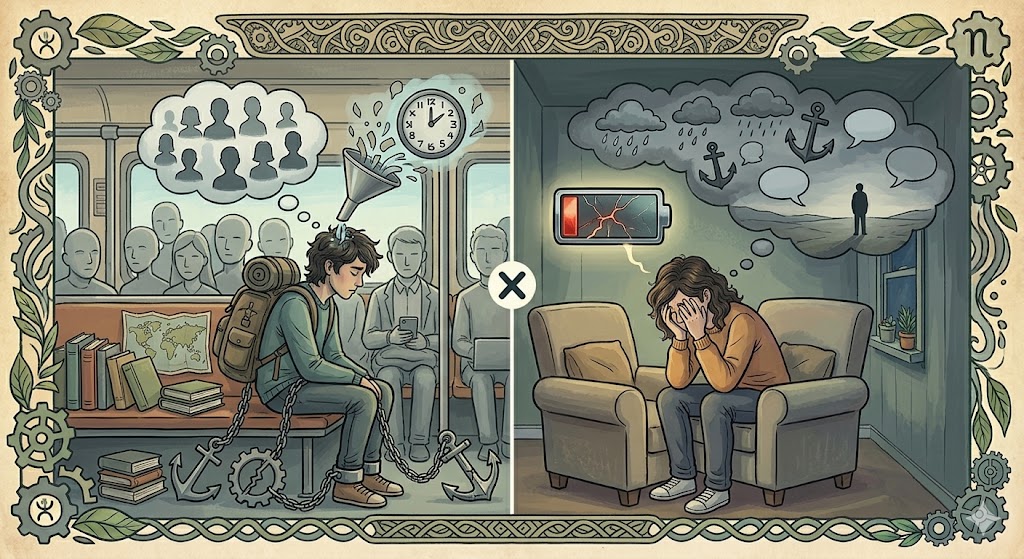
Spending time alone and feeling lonely are not the same thing — but for introverts, the line between them can blur in ways that are worth understanding. You might pull away from people to recharge and genuinely enjoy it. Or you might spend whole days alone and feel a quiet ache that doesn’t go away. Introvert loneliness is real, and it doesn’t cancel out your need for solitude. Both things can be true at once.
What Introvert Loneliness Actually Means
Solitude is chosen. Loneliness is the feeling that something is missing — specifically, meaningful connection. Introvert loneliness isn’t about wanting to be surrounded by people. It’s more specific than that. It’s the absence of someone who actually gets you, or the recognition that your social interactions have been surface-level for too long.
Carl Jung, who first described introversion as a preference for the inner world, never suggested that introverts don’t need connection. They do. The difference is that introverts typically find large, shallow socialising draining rather than satisfying. That means the usual remedies — go to a party, join a group, put yourself out there — often don’t address introvert loneliness at all.
Neurologically, introverts tend to have higher baseline arousal and respond more strongly to dopamine stimulation, which is partly why overstimulating environments feel exhausting rather than energising. But acetylcholine, a neurotransmitter associated with calm focus and internal reflection, plays a larger role in how introverts feel rewarded. Deep, quiet connection satisfies that system. Noise and crowds don’t.
Signs That Solitude Has Shifted Into Loneliness
Healthy solitude feels like a choice. You close the door, breathe out, and settle into yourself. There’s a sense of quiet satisfaction, not relief from something painful but genuine ease. Loneliness feels different in the body. It tends to carry a low-grade restlessness, a kind of hollow background hum that stays even when you’re doing things you normally enjoy.
It often shows up as checking your phone more than usual — not because you expect anything, but because you’re hoping for it. You might notice that time alone has stopped feeling restorative and started feeling like waiting. The books that usually absorb you feel flat. You’re present in your own space but not quite at home in it.
Another pattern worth recognising: you’ve been socially active — attending things, replying to messages, showing up — but still feel disconnected. That’s a strong signal of introvert loneliness specifically. Activity isn’t the same as intimacy, and introverts often know this more acutely than most.
What Actually Helps
The most useful shift is moving from frequency to depth. One honest, unhurried conversation with someone who knows you well does more than ten polite check-ins. If that kind of relationship doesn’t exist in your life right now, that’s worth sitting with — not as a failure, but as useful information about what to build toward.
Reach out to one person specifically rather than broadcasting to a group. A short, direct message — “I’ve been thinking about you, want to catch up properly?” — tends to produce the kind of exchange that actually helps. Vague group socialising rarely touches introvert loneliness.
Pay attention to what solitude feels like before and after different activities. Journalling, long walks, reading that challenges you — these tend to make solitude feel fuller. Passive scrolling and background noise tend to make it feel emptier. The distinction matters.
If you’ve been isolating because anxiety or low mood makes contact feel too effortful, that’s a different problem from introversion. Introversion is a preference. Avoidance is a response to distress. Treating them the same way doesn’t work.
When loneliness is present, doing something that produces a small, real sense of contribution helps — a specific act of help for someone else, a creative project with a tangible output. These aren’t distractions. They re-engage the part of you that feels connected to something beyond the current moment.
When to Get Support
Solitude vs loneliness becomes a more serious question when the lonely feeling persists for weeks, starts affecting sleep or concentration, or arrives alongside a sense that connection is simply unavailable to you — that no one would understand you anyway. That kind of thinking tends to deepen isolation rather than reflect it accurately. A therapist who understands introvert mental health can help you separate what’s real from what the low mood is telling you.
A Few Questions Worth Answering
- Is it normal for introverts to feel lonely?
-
Yes. Introversion describes how you process stimulation and socialise, not how much connection you need. Introverts need meaningful relationships just as much as extroverts — they just find large, frequent, or shallow social contact unsatisfying. Introvert loneliness often comes from a lack of depth, not a lack of company.
- How do I know if I’m choosing solitude or avoiding people?
-
Chosen solitude feels settled. Avoidance tends to come with tension — relief when plans are cancelled, anxiety about contact, or a sense of dread before social situations that didn’t used to feel difficult. If being alone has started to feel like hiding, that’s worth paying attention to in the context of introvert mental health.
- Can too much solitude be harmful for introverts?
-
It can. Prolonged isolation — even when it feels comfortable — can reinforce low mood, reduce your tolerance for social contact over time, and quietly narrow your sense of what’s possible. The goal isn’t more socialising. It’s enough of the right kind of connection to keep loneliness from becoming the background condition of your life.
- What’s the difference between solitude vs loneliness as an introvert?
-
Solitude is restorative time alone that you enter by choice and leave feeling more like yourself. Loneliness is an emotional signal that meaningful connection is missing. An introvert can feel lonely in a crowd and fully at peace alone — the feeling itself, not the circumstances, is what tells you which one you’re dealing with.
Knowing the difference between introvert loneliness and healthy solitude isn’t about fixing yourself — it’s about reading yourself accurately. Solitude is something you deserve. But if the quiet has started feeling like absence rather than ease, that signal is worth taking seriously, not pushing aside.