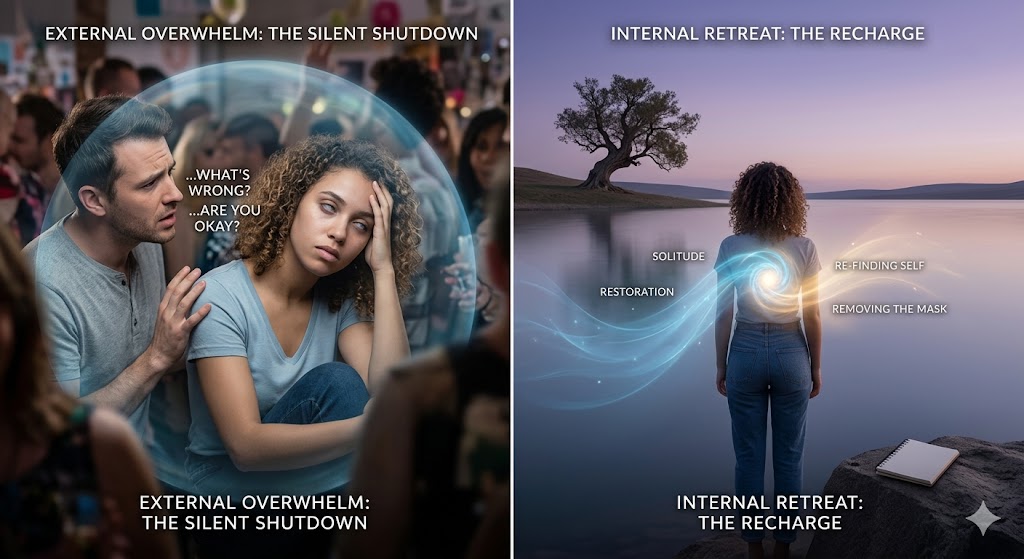
When an introvert pulls away, the people around them often take it personally. You go quieter, stop initiating, skip plans — and someone decides you’re upset, checked out, or losing interest. The reality is usually far less dramatic, and understanding what’s actually happening can save relationships a lot of unnecessary damage.
Why an Introvert Pulls Away — What’s Really Going On
Introverts and extroverts process social interaction differently at a neurological level. Research points to differences in dopamine sensitivity — extroverts tend to respond more strongly to external reward and stimulation, while introverts are wired to find it draining faster. Psychologist Hans Eysenck built on this in the 1960s, and later work in the Big Five personality model confirmed introversion as a stable trait, not a mood or a phase.
When an introvert pulls away, it’s usually a sign that their nervous system is overloaded. Too many conversations, too many decisions made with other people present, too much time performing sociability — it accumulates. Withdrawal is not rejection. It’s recovery.
The distinction matters. An extrovert who needs space is often working through something emotionally. An introvert who needs space is often just… full. The tank is empty. Time alone isn’t a punishment they’re giving you — it’s the only thing that actually restores them.
Signs the Introvert in Your Life Is in Withdrawal Mode
Introvert withdrawal has a recognisable pattern once you know what to look for. Responses get shorter — not curt or cold, just minimal. Texts go unanswered for hours or days. Plans get cancelled or quietly avoided. In person, they’re present but somewhere behind their eyes.
It often shows up after high-stimulation periods: a busy work week, a family event, a holiday, a long run of socialising. The withdrawal follows the overload the way sleep follows exhaustion. You might notice they become more careful about their commitments — saying yes less, hedging more. That’s not flakiness. That’s someone who has learned, sometimes painfully, what happens when they ignore their own limits.
In romantic relationships, introvert withdrawal can look like emotional distance. Less physical affection, fewer check-ins, quieter evenings. It doesn’t mean the relationship is in trouble. It usually means the introvert has been running on empty and stopped pretending otherwise.
What Actually Helps — For Introverts and the People Around Them
If you’re the introvert, the most useful thing you can do is name what’s happening before you disappear. Not a lengthy explanation — just something honest and short: “I’m running low and need some quiet time. It’s not about you.” That one sentence prevents a lot of misreading.
Give yourself a concrete window. “I need this weekend alone” is more workable than an open-ended fade. It helps you re-enter on your own terms, and it gives the people who care about you something to hold onto instead of an anxious void.
If someone in your life is the one pulling away, resist the urge to pursue them with questions or reassurance requests. Check in once — genuinely, without an agenda — and then give them room. Crowding an introvert who needs space tends to extend the withdrawal, not shorten it.
Practically: stop apologising for needing solitude. Leaving a gathering early is not rude if you do it without drama. Skipping an optional event to stay home is a reasonable choice, not a character flaw. The guilt that introverts carry about their own needs is often more exhausting than the socialising itself.
When Pulling Away Becomes Something Worth Addressing
Introvert withdrawal is normal. Prolonged isolation that leaves you — or someone you care about — genuinely disconnected from everyone, for weeks, with no sign of wanting to reconnect, is worth a second look. If the withdrawal is accompanied by low mood, loss of interest in things that usually matter, or a sense that connection feels impossible rather than just temporarily exhausting, that moves beyond introversion into something a therapist can help with. The line is roughly: recharging feels good; this doesn’t feel like anything at all.
A Few Questions Worth Answering
What is happening when an introvert pulls away?
When an introvert pulls away, it is usually depletion rather than a decision. The withdrawal is maintenance, not a verdict on you.
Is introvert pulling away a warning sign?
Introvert pulling away becomes a warning sign only if it does not reverse. Temporary withdrawal followed by return is the normal pattern.
Why do introverts withdraw from people they like?
Why do introverts withdraw from people they like? Because affection does not reduce the energy cost. The two are separate accounts.
How should you respond to introvert distancing?
Introvert distancing responds badly to pursuit and well to a low-pressure message. When an introvert pulls away, leave the door open rather than knocking harder.
Is it normal for an introvert to suddenly pull away in a relationship?
Yes. Introvert withdrawal in relationships often spikes after periods of high social demand — a big life event, a stressful month, an extended visit from family. It’s not a signal that the relationship is failing. It’s a signal that the introvert needs recovery time. The key is communication, even brief communication, so the other person isn’t left guessing.
How long does introvert withdrawal usually last?
It varies. A few hours of quiet after a long day is common. A weekend of low contact after a particularly draining period is also normal. If an introvert needs space for longer than a week or two with no contact at all, it may be worth a gentle check-in — not to pressure them, but to make sure they’re okay.
Does an introvert pulling away mean they’re losing interest?
Not necessarily, and not usually. Introvert withdrawal is about energy management, not emotional withdrawal. The confusion arises because in some personality types, distance signals disengagement. For introverts, distance often signals the opposite — they feel safe enough to stop performing. Watch for whether they return, not whether they disappeared.
How should I respond when an introvert needs space?
Say something simple and mean it: “Take the time you need. I’m here when you’re ready.” Then actually give them the space without following up repeatedly. One check-in is caring. Three check-ins in a day is pressure. Introverts in relationships don’t need less connection — they need connection that doesn’t cost them more than they have.
Introvert withdrawal isn’t complicated once you understand what it actually is: recovery, not retreat. The people who handle it best — introverts and the ones who love them — are usually the ones who stopped treating solitude as a problem to be solved and started treating it as information worth listening to.