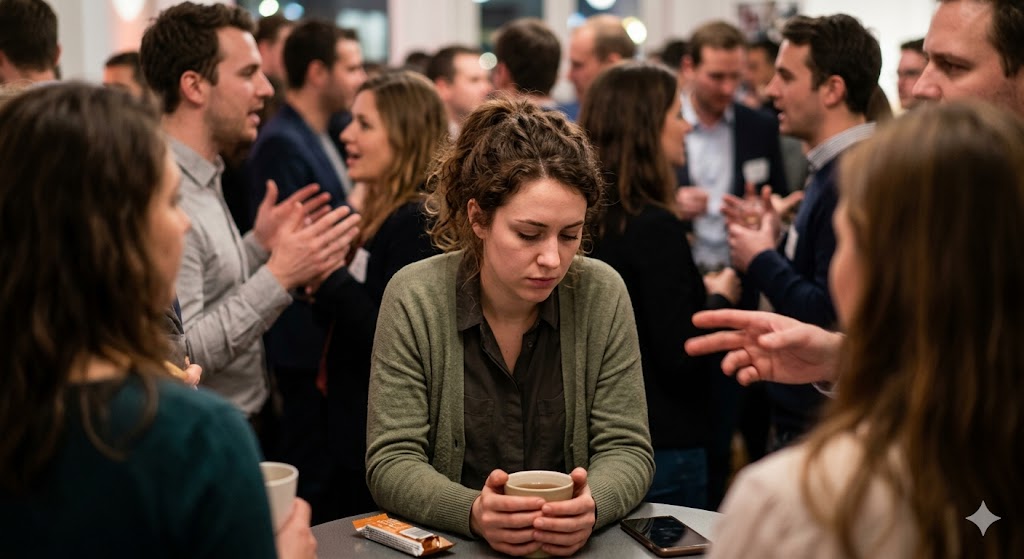
Introvert burnout is not just tiredness after a busy week. It is a specific kind of depletion that builds slowly, often before you realise what is happening. Most explanations stop at “too much socialising” — but the real picture is more layered than that. Understanding what is actually draining you is the first step toward doing something about it.
What Causes Introvert Burnout
The neurological basis matters here. Research on personality and the nervous system suggests introverts tend to have higher baseline cortical arousal. That means your brain is already doing more processing before any social event even begins. Add a full day of meetings, small talk, open-plan offices, or constant digital notifications, and you are not just tired — your nervous system is genuinely overstimulated.
Introvert burnout is also driven by the chronic mismatch between your natural energy rhythms and what your environment demands. Many introverts spend years in workplaces, relationships, or social structures designed around extroverted norms: constant availability, quick verbal responses, group collaboration, back-to-back interactions. The exhaustion is not weakness. It is the cost of sustained adaptation.
There is also the emotional labour piece. Introverts often mask discomfort in social situations — staying longer than feels right, performing enthusiasm they do not feel, suppressing the need to withdraw. That suppression is metabolically expensive. Over time, the accumulated cost of pretending you are fine is a significant driver of introvert energy drain.
Signs the Burnout Is Already Setting In
Introvert burnout often looks like irritability before it looks like exhaustion. You might notice that small requests feel like enormous impositions. A colleague asking a quick question, a friend suggesting plans, your phone ringing — things that would normally be fine start to feel like violations of something.
It also shows up as a flattening of interest. Things you normally enjoy — reading, creative work, even solitary hobbies — stop feeling restorative. That is a meaningful signal. When your usual recovery activities no longer work, the depletion has gone deeper than ordinary tiredness.
Socially, you might find yourself cancelling plans not out of preference but out of necessity, then feeling guilty about it, which adds its own layer of drain. There is often a cognitive fog too — slower thinking, difficulty concentrating, a sense of operating at reduced capacity even after a full night of sleep. If that pattern persists across several weeks, it is not a bad day. It is accumulated overstimulation introvert recovery cannot outpace.
What Actually Helps
The single most effective shift is protecting recovery time before you need it, not after. That means building unscheduled, genuinely quiet time into your week as a structural feature — not a reward for getting through a hard stretch. Even 90 minutes of uninterrupted solitude mid-week can reduce the accumulation that leads to introvert burnout.
Look at where your social exhaustion introverts experience most acutely. Often it is not the big events — it is the daily drip of low-grade interaction: chatty offices, obligatory small talk, group chats that never go quiet. Reducing exposure to chronic low-level drain is more effective than recovering from periodic collapse.
When you leave a gathering early, do not apologise and over-explain. Simply leave. The story you tell about needing to leave costs more energy than leaving itself.
On practical terms: keep a loose log of what depletes you most sharply. Not everything social drains equally. Identifying the specific contexts — certain people, certain formats, certain times of day — lets you make targeted adjustments rather than blanket avoidance.
Finally, treat sleep and physical stillness as active tools, not passive defaults. A walk without headphones, an hour without screens, sitting somewhere quiet — these are not luxuries. They are the specific inputs your nervous system needs to downregulate after overstimulation.
When to Get Support
If introvert burnout has been present for months rather than weeks, or if it has started affecting your work performance, close relationships, or physical health, that is worth taking seriously. A therapist familiar with highly sensitive people or nervous system regulation can offer more than general wellness advice. You do not need to be in crisis to benefit from professional support — persistent depletion is reason enough.
A Few Questions Worth Answering
What are the real causes of introvert burnout?
The causes of introvert burnout are cumulative rather than dramatic: sustained overstimulation, no recovery gaps, and social demand that never drops below your ceiling.
What causes introvert burnout most often at work?
What causes introvert burnout at work is usually the environment rather than the workload — open plan, constant availability, and meetings that leave no thinking time.
Why do introverts burn out even in jobs they like?
Why do introverts burn out in jobs they enjoy comes down to conditions, not content. The causes of introvert burnout sit in how the work happens, not what it is.
Can you have several causes of introvert burnout at once?
The causes of introvert burnout usually stack. One alone is survivable; three together compress the timeline considerably.
- How is introvert burnout different from depression?
-
They can overlap, but introvert burnout typically improves with adequate rest and reduced stimulation. Depression tends to persist regardless of circumstances and often involves pervasive hopelessness. If rest is not helping after several weeks, speaking with a doctor is a reasonable step.
- Can introverts experience burnout even with a quiet lifestyle?
-
Yes. Introvert energy drain is not only about social volume. Internal pressure — perfectionism, chronic overthinking, suppressing your own needs to keep others comfortable — produces the same depletion. The source does not have to be external to be real.
- How long does it take to recover from introvert burnout?
-
For mild cases, a few days of genuine rest can shift things noticeably. For burnout that has built over months, expect recovery to take weeks, sometimes longer. Pushing through rarely shortens the timeline — it usually extends it.
- Does overstimulation in introverts get worse with age?
-
Not necessarily worse, but many introverts report becoming less able to override it. Tolerance for social exhaustion introverts experience tends to shrink as the consequences of ignoring it become clearer. That is not decline — it is a better-calibrated self-awareness.
Introvert burnout is easier to prevent than to reverse. The patterns that lead to it are usually visible in retrospect — weeks of too much output, not enough recovery, and too many small concessions to other people’s comfort at the expense of your own. Noticing the pattern earlier means you get to make a different choice before the cost becomes significant.