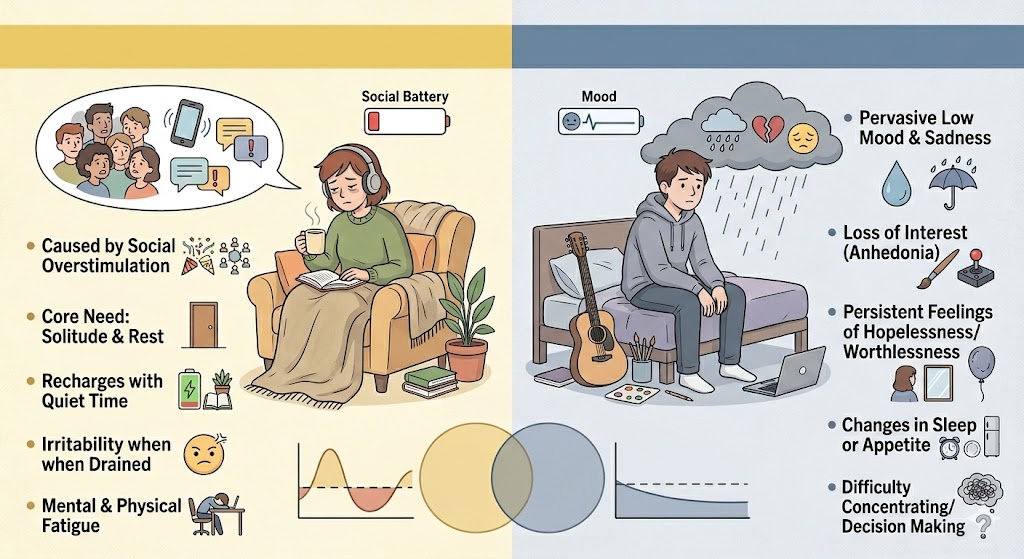
Introvert burnout and depression can look almost identical from the outside — and they can feel that way from the inside too. Both leave you withdrawn, exhausted, and struggling to function. But they are different things, and treating one as if it were the other can make you feel worse, not better. Learning to spot introvert burnout vs depression early is one of the most practically useful things an introvert can do for their own wellbeing — understanding introvert burnout vs depression changes how you respond to it.
What Introvert Burnout vs Depression Actually Involves
Introvert burnout is a state of deep neurological exhaustion caused by sustained overstimulation — too much social contact, noise, obligation, or emotional demand with too little recovery time. Introverts, whose nervous systems are wired to process information more deeply, use more mental energy in social and stimulating environments. When that energy isn’t replenished through genuine solitude and quiet, the system runs dry.
Depression is a clinical condition involving persistent low mood, altered brain chemistry — particularly disruptions to serotonin, dopamine, and norepinephrine — and a loss of interest or pleasure that extends across most areas of life. It isn’t caused by too much social activity. It can arise from genetics, trauma, prolonged stress, loss, or no identifiable cause at all.
The overlap happens because both states produce withdrawal, fatigue, and difficulty engaging with the world. But the underlying mechanism is different. Burnout is depletion. Depression is a different kind of illness altogether — one that doesn’t resolve simply by resting.
Signs That Point One Way or the Other
With introvert burnout symptoms, the exhaustion tends to feel physical as well as emotional — a kind of heavy, foggy tiredness that lifts, at least partially, after real rest and solitude. You might notice that after a quiet weekend alone you feel measurably better, even if not fully restored. Social events feel not just unpleasant but genuinely painful. Small talk becomes almost intolerable. Your irritability spikes in ways that feel tied to specific situations rather than everything.
Depression tends not to respond to rest in the same way. You can sleep for ten hours and wake up feeling no better — sometimes worse. The low mood doesn’t lift after a quiet day alone. Things that used to genuinely interest you — not just drain you, but interest you — feel flat or pointless. This loss of pleasure, called anhedonia, is one of the clearest signals. With social exhaustion from burnout, you still want the things you enjoy; you just don’t have the energy for them right now. With depression, the wanting itself goes quiet.
Another distinction: burnout often has a traceable cause — a relentless period at work, a family crisis, months of social overdrive. Depression can arrive without an obvious reason, which makes it more disorienting.
What Actually Helps Each One
For introvert burnout, the most direct intervention is structured, unapologetic recovery time. Not passive scrolling — actual low-stimulation rest. A full day without social obligations, screens on quiet, no performing. When you leave a gathering early, leave without explaining yourself. Protect your mornings if that’s when you feel clearest. Reduce commitments before you hit empty, not after.
Saying no without a story attached to it is a skill worth practising. “I can’t make it” is a complete sentence. Introvert energy depletion worsens when you spend recovery time managing other people’s feelings about your recovery.
For depression, rest alone is rarely enough. Behavioural activation — doing small, concrete things even when motivation is absent — is one of the better-evidenced approaches. Short walks, maintaining a basic routine, keeping one social connection even when it feels like effort. These don’t cure depression, but they prevent the withdrawal from deepening it.
If you’re dealing with depression, therapy — particularly cognitive behavioural therapy or interpersonal therapy — and sometimes medication, makes a genuine difference. Neither of those is necessary for burnout recovery. That distinction matters.
When to Get Support
If rest genuinely helps and you can trace your exhaustion to a period of overstimulation, burnout is the more likely explanation. But if your low mood persists beyond two weeks, if you’ve lost interest in things that matter to you, if thoughts turn dark or hopeless, those are signs worth taking to a doctor or therapist. There’s no threshold of suffering you need to hit first. Getting a professional opinion early is straightforward, not dramatic.
A Few Questions Worth Answering
How do you separate introvert burnout vs depression?
Introvert burnout vs depression separates on whether rest helps. Burnout lifts with genuine recovery; depression usually does not.
Is it burnout or depression if I have withdrawn completely?
Is it burnout or depression is best tested by what solitude does. Introvert burnout vs depression differ in whether the quiet still restores.
Can you have burnout or depression together?
Burnout or depression frequently overlap, and prolonged burnout can precede a depressive episode. That is a reason to check rather than to wait.
Why does introvert burnout vs depression matter?
Introvert burnout vs depression matters because the responses differ: one needs load removed, the other usually needs clinical help.
- Can introverts get both burnout and depression at the same time?
- Yes. Prolonged introvert burnout that goes unaddressed can contribute to depression over time, particularly when it’s accompanied by chronic stress. The two can overlap. If rest improves some things but not others, it’s worth speaking to a professional rather than assuming one label covers everything.
- How long does introvert burnout typically last?
- Mild burnout can lift in a few days of genuine rest. Severe introvert energy depletion — especially after months of overstimulation — can take several weeks or longer to resolve fully. The key variable is whether you’re actually protecting recovery time or just reducing activity slightly.
- Is social exhaustion vs depression a useful distinction to make yourself?
- It’s a useful starting point, not a diagnosis. Noticing whether rest helps, whether your mood has a traceable cause, and whether your interest in things you love is still present — these are useful observations. But if you’re genuinely uncertain, a GP or therapist can clarify things that self-reflection can’t.
- Can introverts mistake depression for their personality?
- This happens more than people realise. Introverts are so accustomed to needing solitude and feeling drained by social contact that depression can hide inside what feels like normal introversion. If your baseline has shifted noticeably — not just tired but persistently flat — that shift is worth paying attention to.
The most useful thing to hold onto: burnout asks for rest and space. Depression asks for something more. Both deserve a real response — not pushing through, not dismissing what you’re feeling as just being introverted. Your energy levels are information. It’s worth learning to read them accurately.